
Home / ASMPT SMT Machines / SIPLACE CA2
Model reference · Confirm the exact offered configuration
OverviewSIPLACE CA2 Chip Assembly and SMT Placement Platform
SIPLACE CA2 combines die placement directly from sawn wafers with SMT components supplied by feeders. It addresses SiP and advanced-packaging workflows, where wafer handling, substrate transport and traceability matter as much as nominal placement rate. Confirm the installed wafer system and accuracy class before comparing it with a conventional mounter.
Manufacturer-published model data
SIPLACE CA2 Technical Specifications
| Process modes | ASMPT identifies die attach and flip-chip from wafer plus SMT component placement from tape and reel. |
|---|---|
| Published placement speed | SMT 76,000 cph; die attach from wafer 54,000 cph; flip-chip from wafer 51,000 cph under the manufacturer's conditions. |
| Accuracy classes | 20 µm standard, with 15 µm and 10 µm classes listed at 3 sigma; application and board range differ by class. |
| Wafer and conveyor | The manufacturer describes a wafer exchange system for up to 50 wafers and different single-/dual-lane board envelopes. |
Important: model-level figures and features are conditional manufacturer information, not guarantees for a particular used SIPLACE CA2 unit.
Key Features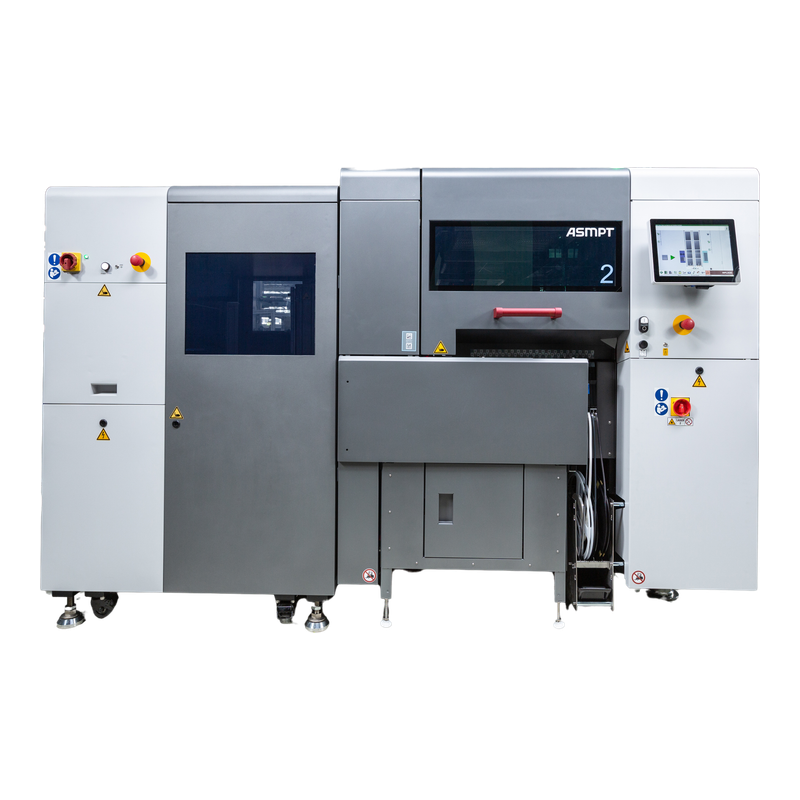
Configuration Must Be Verified
The actual SIPLACE CA2 quote should identify the wafer exchange system, placement heads, conveyor, accuracy class, software, voltage and visible condition.
Buyer decision guide
When SIPLACE CA2 Makes Sense — and When It May Not
SIPLACE CA2 selection should begin with production requirements and evidence, not with a model name alone.
Typical Applications
Typical Applications for SIPLACE CA2
SIPLACE CA2 should be evaluated against the buyer’s wafer and die formats, substrate envelope, accuracy class, traceability and line transport. The final application fit depends on the evidence for the specific unit.
Before quotation
Three SIPLACE CA2 Buyer Questions
These questions keep the quotation scope connected to the buyer’s real SMT process.
1
Which die, wafer and substrate formats are in the actual application?
SIPLACE CA2 buyers should confirm this with actual-machine evidence before quotation.
2
Which accuracy class, wafer exchange module and conveyor are installed?
SIPLACE CA2 buyers should confirm this with actual-machine evidence before quotation.
3
Can the proposed unit demonstrate traceability and placement with representative material?
SIPLACE CA2 buyers should confirm this with actual-machine evidence before quotation.
Used-machine inspection
Inspection and Export Preparation for an Actual SIPLACE CA2
- Nameplate and configurationModel, serial, year, voltage and installed options.
- Machine configurationMechanical, transport, sensing, camera, software and motion condition relevant to the quoted SIPLACE CA2.
- Transport and softwareConveyor, sensors, program and line-interface evidence where applicable.
- Running and packing proofPower-on evidence, visible operation and export packing records.
Spare Parts
SIPLACE CA2 Spare Parts Scope
Request a unit-specific SIPLACE CA2 list for wafer-handling, placement and transport service items matched to the installed configuration. Availability is confirmed only in a quotation.
Quotation checklist
Provide wafer and substrate formats, required accuracy class, throughput target, site services and destination, required accessories and desired inspection evidence for the proposed SIPLACE CA2.
FAQ
Common questions for overseas buyers evaluating a SIPLACE CA2.
01Process
Is CA2 just a faster conventional chip assembly and smt placement platform?
No. Its defining application is combining wafer-fed die attach or flip-chip with SMT placement.
02Accuracy
Does the 10 µm class apply to every board size?
No. ASMPT lists different board envelopes for accuracy and transport configurations.
03Supply
Is a 50-wafer exchange unit included automatically?
Do not assume so. Verify the installed module and configuration in the actual offer.
Send Your SIPLACE CA2 Production Requirement
Share wafer and substrate formats, required accuracy class, throughput target, site services and destination and inspection expectations. LCSMT can review whether an actual SIPLACE CA2 configuration is a practical match.
Manufacturer source
Read the original ASMPT SMT Solutions model information. Published specifications are configuration-dependent; verify the exact machine before quotation.