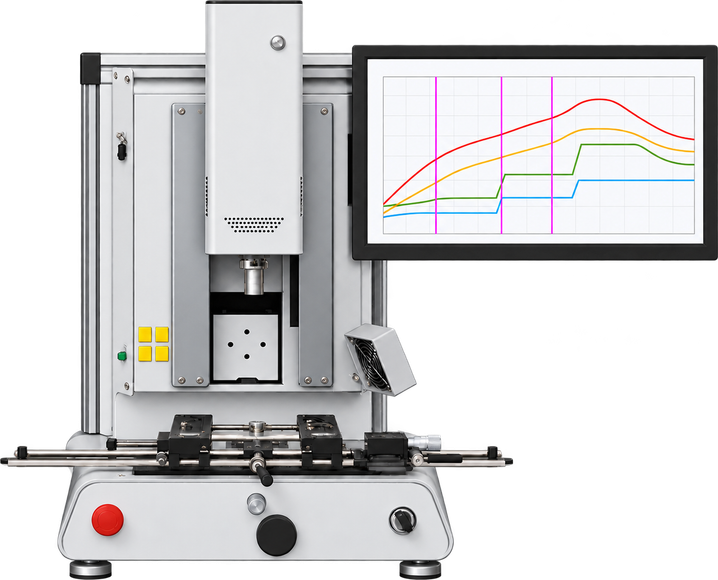
Your PCB
Board or panel dimensions, thickness, weight and single- or double-sided assembly.
SMT equipment sourcing · inspection · packing · global delivery
A complete SMT line starts with your boards, components and production goals. Choose the situation closest to yours, then see what needs to be confirmed.
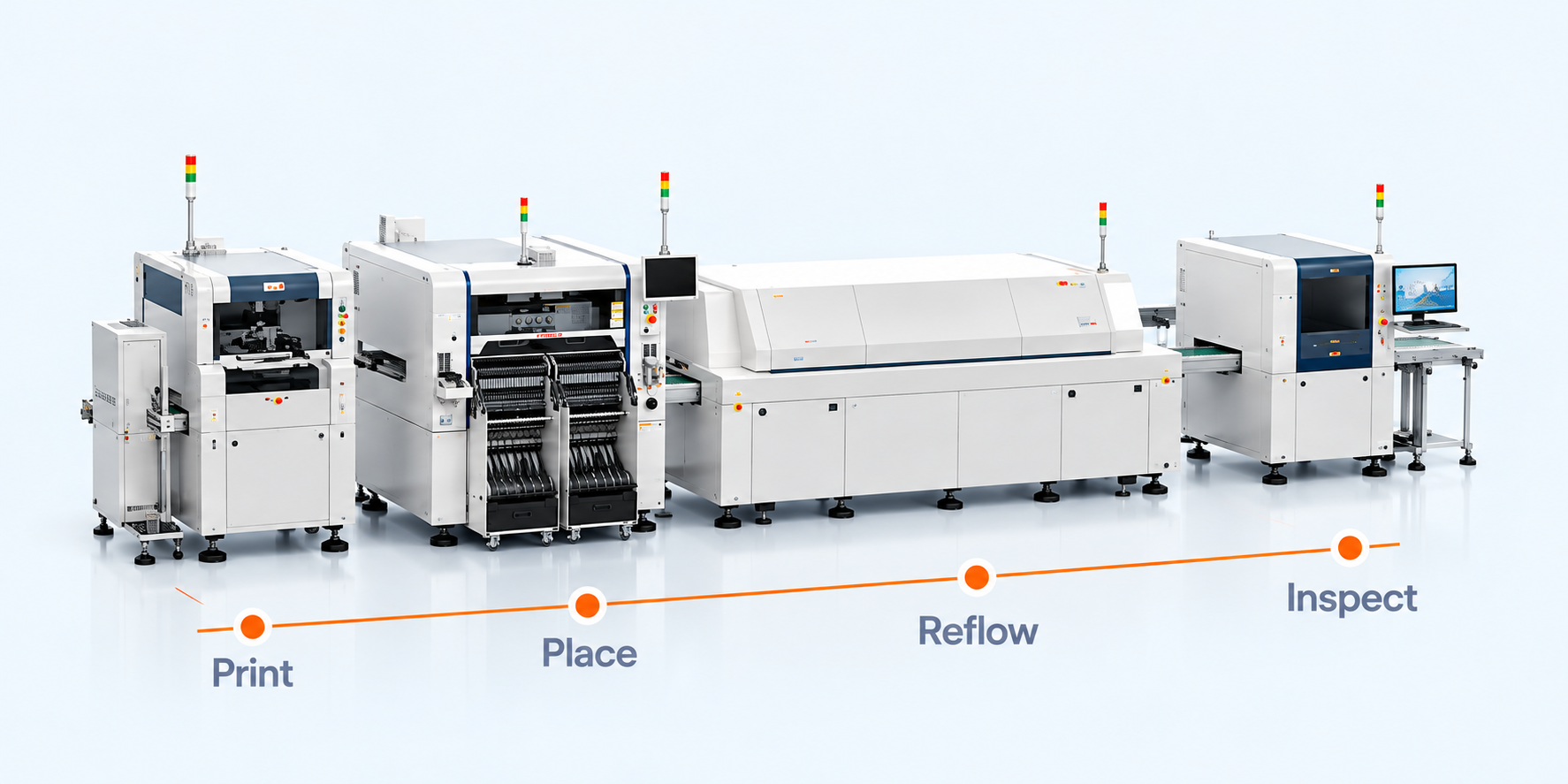
Bring printing, placement, soldering and inspection into one equipment discussion. Start with a workable process and floor plan, then compare the models and accessories needed at each stage.
For small batches and changing product mixes, setup time matters alongside placement speed. Review component coverage, feeders, nozzles and programming requirements before narrowing the equipment choices.
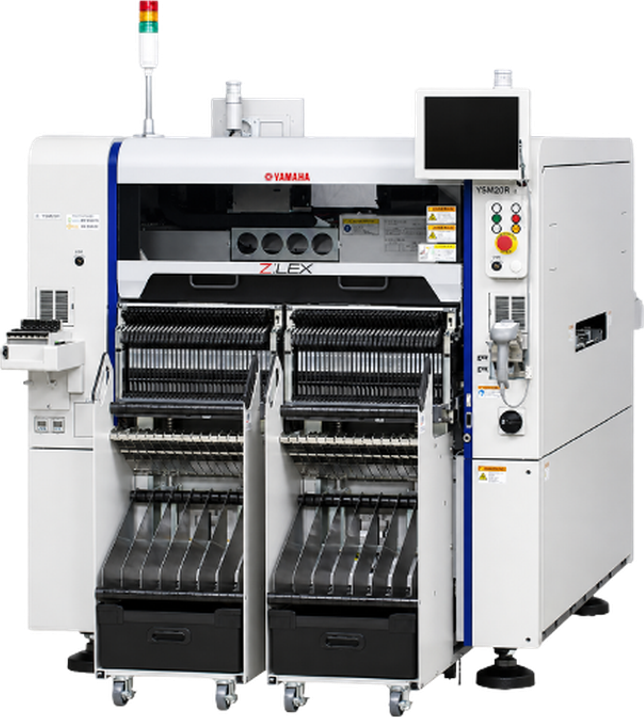
A replacement machine does not always require a complete new line. Identify where output or process coverage is limited, then check how the proposed equipment will work with the machines you plan to keep.
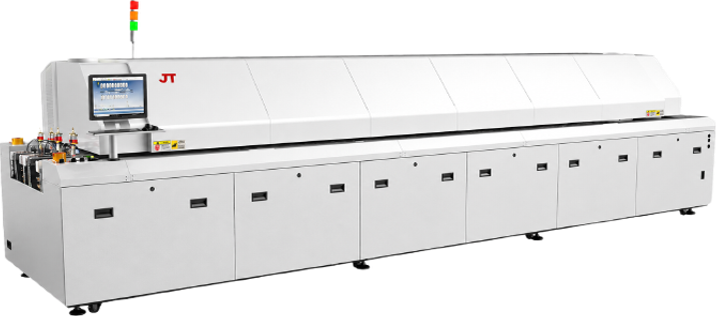
Share what you know. If a detail is still undecided, include it in the discussion.
Board or panel dimensions, thickness, weight and single- or double-sided assembly.
Package range, fine-pitch devices and tape, tray or tube feeding. A BOM helps clarify the mix.
Required boards per shift, batch size and product mix. Catalogue speed alone is not your line output.
Solder paste, thermal process, inspection points and any through-hole or coating requirements.
Floor plan, maintenance access, power, compressed air, exhaust and nitrogen if required.
Budget range, machines to retain, destination country and the timing you are working toward.
No account needed. Fill in the basics, then review the brief in your SMT line inquiry.
The important details sit between the machines: board flow, interfaces, accessories and evidence for the actual equipment being quoted.
New or used, single-brand or mixed-brand: compatibility needs to be checked for the specific configuration.
Equipment selection and practical delivery questions stay in the same conversation.
Share your boards, component requirements, target output and floor plan.
Focus: a clear project briefCompare equipment choices, retained machines, accessories and layout constraints.
Focus: an agreed equipment scopeReview availability, actual-machine details, inspection arrangements and quotation terms.
Focus: evidence before purchaseCoordinate export packing, destination details and freight handover for the agreed scope.
Focus: a defined shipment planNo fixed model list yet?
Your production brief is enough to begin.
Yes, you can start the discussion with an upgrade rather than a complete replacement. Share the existing models, board-flow direction, working height and the process you want to improve. Compatibility must be checked before the configuration is agreed.
A mixed-brand configuration can be considered, but mechanical transfer and software communication are separate checks. We review the proposed equipment and interfaces; a shared brand name or connector does not by itself confirm integration.
Provide the required boards per shift, component mix and typical batch sizes. These help frame equipment selection and identify constraints. Actual output depends on the board, program, process and changeovers; an equipment catalogue figure is not a guaranteed line result.
Confirm the required installation, training or commissioning support during the quotation discussion. The service scope, responsibilities and any associated costs should be agreed for the specific project.
Send your production target, board details and any machines you already own. We can start with the information you have.