01Buying question
Will every UFS or MCU package work?
Exact support depends on the full device code, adapter, algorithm and installed options. Obtain a part-specific confirmation.
SMT equipment sourcing · inspection · packing · global delivery

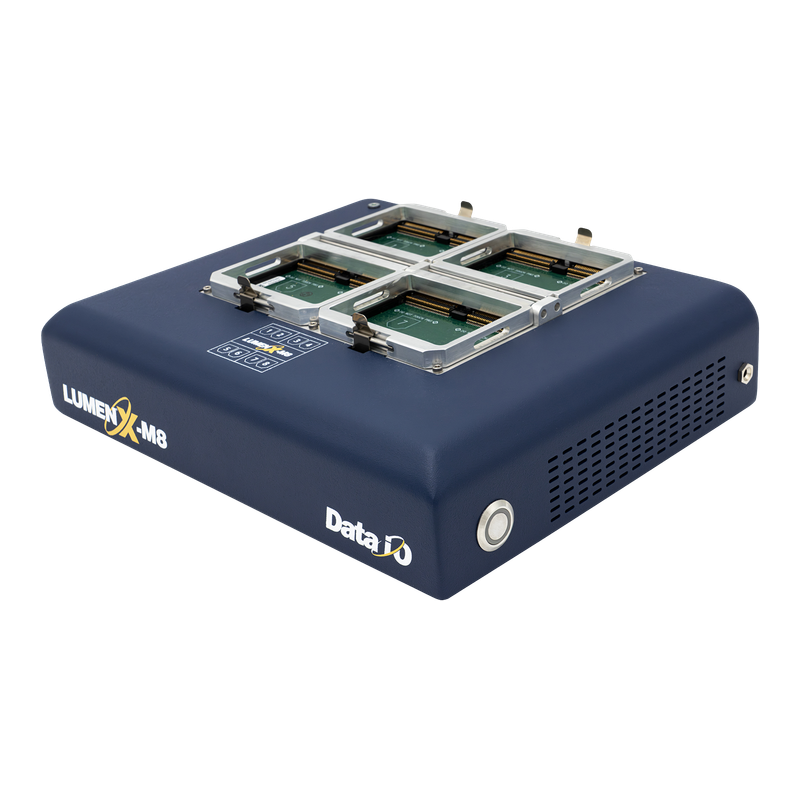
Check the exact semiconductor part, package, algorithm and adapter before selecting a desktop programmer. Data I/O lists LumenX-M8 as an eight-site platform for engineering and production programming. A useful comparison measures accepted devices through the complete loading, programming, verification and unloading sequence.
| Configuration | Eight-site desktop device programmer |
|---|---|
| Published use | Engineering, new-product introduction, production validation and programming centres |
| Device categories listed | MCU, UFS, eMMC, NAND, NOR, FPGA, security IC and SoC. Exact part support must be checked. |
| Adapter requirement | Socket and package-specific adapter compatibility must match the device and algorithm |
| Published performance context | The current model page describes transfer and verification features. Confirm firmware, options and the supported device before applying any speed figure. |
| Job preparation | Controlled device data, algorithm selection and verification settings are part of the programming workflow |
| Handling boundary | Desktop platform. Separate the operator's loading and unloading time from electrical programming time. |
| Support route | Manufacturer Chinese materials identify a Shanghai operation. Confirm current LumenX-M8 delivery and service scope. |
Manufacturer information and the matching equipment literature. Manufacturer reference. Confirm the supplied configuration on the quotation.
Send the complete semiconductor ordering code, package and silicon revision together with the intended data format. A broad device-family label is insufficient to select an adapter or establish the programming algorithm. Explain whether the job includes serialisation, secure configuration, multiple data areas or special verification requirements. Check whether those operations are supported by the proposed software package. For mixed work, include the changeover sequence and the way the operator prevents a batch from receiving the wrong file.
Agree an approved data image and a safe verification method before loading customer material. Demonstrate all intended sites with the correct adapters. Record load time, download time, programming, verification, retries and unloading. Include a controlled example of a rejected device and show how it is segregated. For jobs with unique data, compare the generated records with the devices and confirm that an interrupted job cannot silently reuse an identifier. Use sanitised trial material when security keys or production secrets are involved.
Use the manufacturer's device search and have the seller confirm the ordering code, silicon revision, package adapter and algorithm version in writing. Include any special voltage or security requirements. A device in the same broad family may need a different socket or a revised algorithm. Keep the compatibility answer with the quotation so a delivered adapter can be checked before the first production job.
Data transfer rate does not include every operation that consumes bench time. Operator handling, adapter changes, initial image download, verification and failure recovery all affect usable capacity. Ask for a timed trial with the intended device and image size. Separate a cold job start from an already loaded repeat run. This makes the comparison meaningful when deciding between a desktop station and a handler-based programming system.
Assign an approved job identifier and verify the data image checksum before starting a batch. Decide who can edit an algorithm selection, verification setting or serialisation rule. Review how the system records a pass, a retry and a final failure. Where unique identifiers or secure data are involved, specify the audit and recovery requirements without placing production secrets in an ordinary sales enquiry.
List the computer connection, licences, algorithm updates, adapters and service coverage included in the offer. Ask which updates require a subscription and what happens when support for a particular device changes. For a used system, verify that software ownership and support can transfer to the buyer. A clean chassis and eight sockets do not establish the right to use every optional programming feature.
Agree an approved data image and a safe verification method before loading customer material. Demonstrate all intended sites with the correct adapters. Record load time, download time, programming, verification, retries and unloading. Include a controlled example of a rejected device and show how it is segregated. For jobs with unique data, compare the generated records with the devices and confirm that an interrupted job cannot silently reuse an identifier. Use sanitised trial material when security keys or production secrets are involved.
Inspect sockets and contacts for wear using the supplier's approved procedure. Track adapter identity, insertion history where available and the conditions that trigger replacement or cleaning. Keep algorithm, firmware and software versions under change control. After a socket or software change, run a verification job using suitable reference devices before releasing production. Confirm how the computer and programming jobs are backed up and restored, with access controls appropriate to the data being handled.
Include the following when asking for a configuration and acceptance plan.
Common questions when selecting Data I/O LumenX-M8 Eight-Site Desktop Device Programmer for your line.
Exact support depends on the full device code, adapter, algorithm and installed options. Obtain a part-specific confirmation.
Output depends on site utilisation, device time, data preparation and handling. Measure accepted devices through the complete job.
The photo is a model reference. Ask for the adapter part numbers, quantities and condition on the delivery list.
Agree a controlled evaluation using sanitised material or the organisation's approved secure process. Specify logging and recovery without exposing keys in an ordinary enquiry.
The manufacturer publishes Chinese LumenX material and identifies a Shanghai operation. Confirm the current sales contact, exact M8 configuration and delivery terms before procurement.
Check the applicable model revision and the offered configuration when using these references.
Agree the packed dimensions, handling points and protection for exposed interfaces before arranging freight. Ask for the packing list with loose tools and accessories identified so they can be checked at receiving.
Share the application, dimensions and acceptance requirements. Ask for the fitted configuration, utility drawing and delivery scope.