
Home / SMT printers / DEK TQ
Model reference · Confirm the exact offered configuration
OverviewDEK TQ SMT Stencil Printer Platform
The DEK TQ family covers standard and larger-format stencil printing. TQ and TQ L have different print areas and core cycle times; choose by the actual PCB, stencil and changeover requirement rather than treating the names as interchangeable.
Manufacturer-published model data
DEK TQ Technical Specifications
| Maximum print area | TQ: 400 × 400 mm on the listed one-stage conveyor; TQ L: 600 × 510 mm on the listed single-stage conveyor. |
|---|---|
| Published core cycle | 5 seconds for TQ and 6.5 seconds for TQ L under the manufacturer's conditions. |
| Machine dimensions | TQ: 1000 × 1300 × 1600 mm; TQ L: 1300 × 1500 × 1600 mm, listed L × W × H. |
| Optional automation | Smart Pin Support, paste dispensing, clamping and SPI linkage need configuration-by-configuration confirmation. |
Important: model-level figures and features are conditional manufacturer information, not guarantees for a particular used DEK TQ unit.
Key Features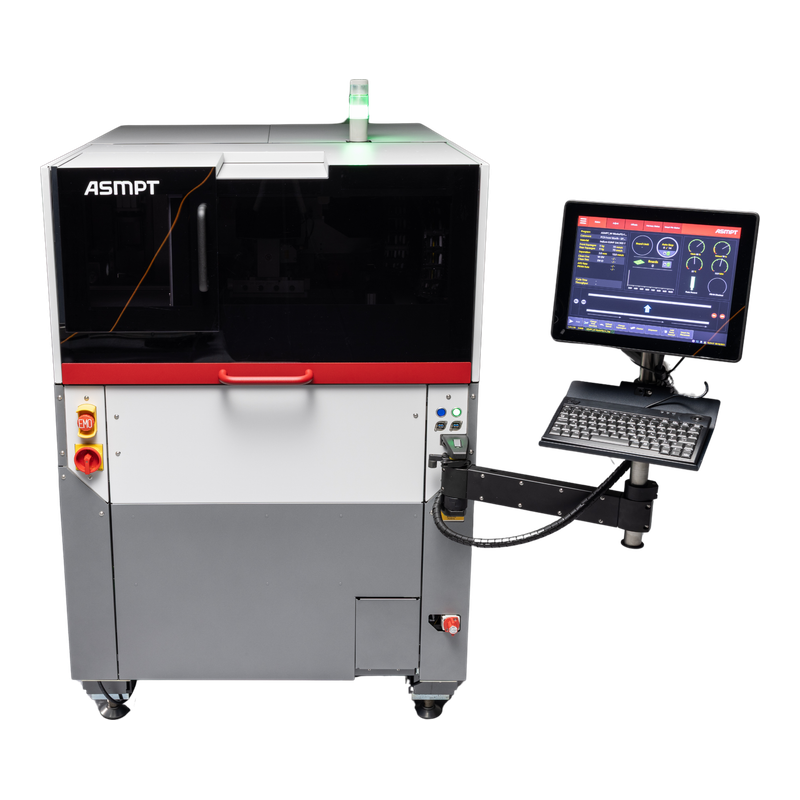
Configuration Must Be Verified
The actual DEK TQ quote should identify the installed clamping, board support, understencil cleaning, paste management, software and voltage.
Buyer decision guide
When DEK TQ Makes Sense — and When It May Not
DEK TQ selection should begin with production requirements and evidence, not with a model name alone.
Typical Applications
Typical Applications for DEK TQ
DEK TQ should be evaluated against the buyer’s PCB and stencil dimensions, board support, cleaning cycle, paste management and SPI interface. The final application fit depends on the evidence for the specific unit.
Before quotation
Three DEK TQ Buyer Questions
These questions keep the quotation scope connected to the buyer’s real SMT process.
1
What are the largest PCB and stencil dimensions in the intended product mix?
DEK TQ buyers should confirm this with actual-machine evidence before quotation.
2
Which clamping, understencil-cleaning and paste-management options are installed?
DEK TQ buyers should confirm this with actual-machine evidence before quotation.
3
What print and inspection samples can be demonstrated on the proposed unit?
DEK TQ buyers should confirm this with actual-machine evidence before quotation.
Used-machine inspection
Inspection and Export Preparation for an Actual DEK TQ
- Nameplate and configurationModel, serial, year, voltage and installed options.
- Machine configurationMechanical, transport, sensing, camera, software and motion condition relevant to the quoted DEK TQ.
- Transport and softwareConveyor, sensors, program and line-interface evidence where applicable.
- Running and packing proofPower-on evidence, visible operation and export packing records.
Spare Parts
DEK TQ Spare Parts Scope
Request a unit-specific DEK TQ list for squeegee blades, cleaning rolls, clamps, support pins, sensors and maintenance items. Availability is not claimed on this review page.
Quotation checklist
Provide PCB and stencil dimensions, print cycle target, required cleaning and clamping options, voltage and destination, required accessories and desired inspection evidence for the proposed DEK TQ.
FAQ
Common questions for overseas buyers evaluating a DEK TQ.
01Model choice
Is TQ L simply a faster TQ?
No. ASMPT lists a larger maximum print area and a different published core cycle for TQ L.
02Accuracy
Does the published ±17 µm figure guarantee every board's paste result?
No. It is a manufacturer performance statement under specified conditions; stencil, paste, board support and actual machine condition matter.
03Integration
Does every TQ include closed-loop SPI control?
No. Verify the SPI system, interface and installed WORKS software required for the intended feedback loop.
Send Your DEK TQ Production Requirement
Share PCB and stencil dimensions, print cycle target, required cleaning and clamping options, voltage and destination and inspection expectations. LCSMT can review whether an actual DEK TQ configuration is a practical match.
Manufacturer source
Read the original ASMPT SMT Solutions model information. Published specifications are configuration-dependent; verify the exact machine before quotation.