
Home / DESEN SMT Machines / DSP-RTR
Model reference · Confirm the exact offered configuration
OverviewDSP-RTR Roll-to-Roll Stencil Printer
DESEN identifies DSP-RTR as a roll-to-roll solder-paste printing machine. Its current product page does not provide a numerical process table. Build the enquiry around the web material and roll handling; conventional rigid-PCB printer limits should not be substituted for missing RTR specifications.
Manufacturer-published model data
DSP-RTR Technical Specifications
| Process identity | DESEN names DSP-RTR as an automatic roll-to-roll solder-paste printer. |
|---|---|
| Unpublished envelope | Web width, repeat length, roll diameter, core and material-thickness limits need a configuration-specific data sheet. |
| Web handling | Ask how unwind, rewind, tension control, registration and support are configured for the intended material. |
| Process validation | Request printed samples and transfer inspection using the intended web, paste and stencil; no throughput or yield is assumed. |
Important: model-level figures and features are conditional manufacturer information, not guarantees for a particular used DSP-RTR unit.
Key Features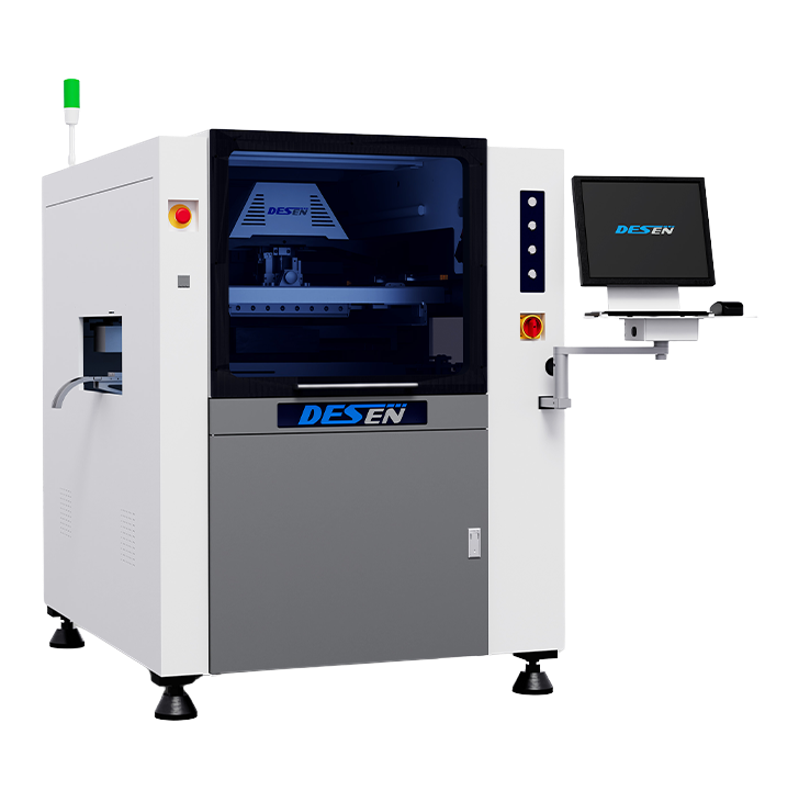
Configuration Must Be Verified
The actual DSP-RTR quote should identify the installed heads, feeders, nozzles, software, voltage, accessories and visible condition.
Buyer decision guide
When DSP-RTR Makes Sense — and When It May Not
DSP-RTR selection should begin with production requirements and evidence, not with a model name alone.
Before quotation
Three DSP-RTR Buyer Questions
These questions keep the quotation scope connected to the buyer’s real SMT process.
1
What web width, roll diameter, core and repeat length must the quoted configuration handle?
DSP-RTR buyers should confirm this with actual-machine evidence before quotation.
2
How are registration and tension measured during a representative run?
DSP-RTR buyers should confirm this with actual-machine evidence before quotation.
3
What unwind, rewind, support and cleaning hardware is included?
DSP-RTR buyers should confirm this with actual-machine evidence before quotation.
Running video confirmation
DSP-RTR Running Video Review
Before shipment, review the relevant power-on, movement, operating state and visible condition for the specific offered unit.
Request a recording of the specific offered machine, including the operating sequence relevant to your application.
- Power-on and visible operating-state confirmation
- Relevant transport, motion or inspection sequence
- Unit-specific condition evidence before export packing
Request an operating demonstrationConfirm the exact configuration and running condition before ordering.
FAQ
Common questions for overseas buyers evaluating a DSP-RTR.
01Specifications
Does DESEN publish a web-width limit on the current DSP-RTR page?
The archived page does not state one; obtain the model-specific data sheet.
02Comparison
Can a rigid-board printer limit be used as an RTR web limit?
No. Web handling and rigid-board transport have different constraints.
Send Your DSP-RTR Production Requirement
Share PCB size, component range, required throughput, feeder strategy, voltage, destination and inspection expectations. LCSMT can review whether an actual DSP-RTR configuration is a practical match.