
Home / Soldering Systems / LC-500B
LCSMT Buyer Guide | Document Evidence
OverviewLC-500B Automatic Dip Soldering System
LC-500B is an automatic dip-soldering system for a board/fixture lowered into a solder pot, rather than a conveyor wave or reflow machine. The source records a 450 × 300 × 90 mm pot and a maximum L390 × W265 mm pin-board capacity.
Model overview
How LC-500B fits the process
LC-500B is an automatic dip-soldering system for a board/fixture lowered into a solder pot, rather than a conveyor wave or reflow machine. The source records a 450 × 300 × 90 mm pot and a maximum L390 × W265 mm pin-board capacity.
The LC-500B is a dip-soldering machine, not a conveyor wave line. Its recorded 450 × 300 × 90 mm pot and L390 × W265 mm pin-board limit are the practical starting points for fixture fit.
The document lists 0–10° adjustable and Room temperature to 300 °C. For a real purchase, match fixture geometry and solder-contact requirements, then verify pot condition, temperature control, movement and electrical input on the actual machine.
Source-recorded technical data
LC-500B Technical Specifications
| Solder-pot dimensions | 450 × 300 × 90 mm |
|---|---|
| Pin-board capacity | Maximum L390 × W265 mm |
| Working height | 750 ± 20 mm |
| Soldering angle | 0–10° adjustable |
| Solder-pot capacity | Approx. 90 kg |
| Temperature range | Room temperature to 300 °C |
| Input power | 220 V |
| Maximum installed power | 4 kW |
| Overall dimensions | 735 × 700 × 1350 mm |
| Approximate weight | 85 kg |
Important: Values are transcribed or translated from the supplied technical document. They are not a guarantee of the configuration or condition of a specific machine.
Actual-unit verification
Evidence to request before quote
The table describes the model. Confirm the offered machine with these actual-unit records:
- Nameplate, exact model, serial number and electrical input
- Installed controller/HMI, alarms and software access
- Visible mechanical condition and safety/interlock evidence
- Solder pot, heaters and temperature-control response
- Carrier/fixture fit and lift/angle mechanism
- Power-on and representative dip-soldering sample
- Included accessories, isolation, export packing and loading proof
Machine and technical media
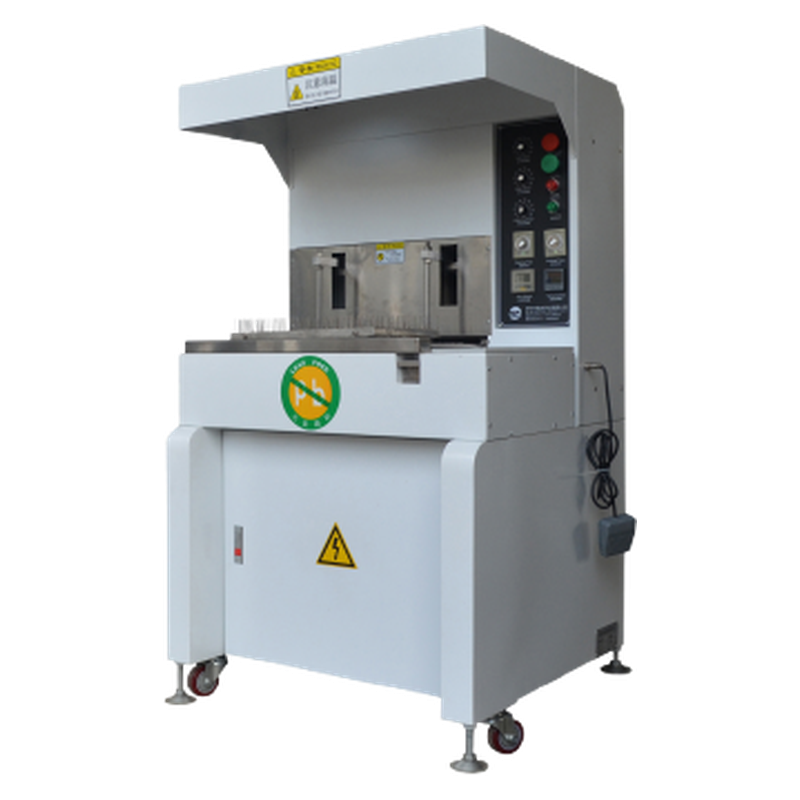
User-supplied whole-machine image
The machine image above was supplied separately for model guide. Select it to see the full 800 × 800 PNG. Confirm the identity and condition of the offered unit.
Buyer decision guide
Evaluate LC-500B for your line
The LC-500B is a dip-soldering machine, not a conveyor wave line. Its recorded 450 × 300 × 90 mm pot and L390 × W265 mm pin-board limit are the practical starting points for fixture fit.
Running video confirmation
Request actual-unit running evidence
Before quotation, request a power-on demonstration of pot heating, carrier movement and a dip-soldered sample for the actual LC-500B.
Used-machine inspection
Inspection and export preparation
Confirm the offered LC-500B with actual-unit records before quotation.
Machine and process
- Nameplate and installed configurationRecord model, serial, voltage, controller and fitted options; the source table is not a unit inventory.
- Process hardwareRequest pot, carrier, lift/angle mechanism, heater/control and temperature evidence.
Keep source-document capabilities separate from actual-machine condition, installed options and test results.
Wave soldering versus reflow and selective soldering
Wave soldering uses a solder wave for exposed underside joints. Reflow soldering heats a solder-paste assembly, while selective soldering addresses chosen joints. Board layout, component thermal limits and required joint access decide which process needs evaluation.
Qualify flux coverage, preheat, conveyor support, solder alloy and wave contact on a populated board. Inspect solder-pot condition and maintenance access; do not choose a machine from nominal transport speed alone.
For LC-500B, use the page’s Solder-pot dimensions, Pin-board capacity, Working height entries as quotation checkpoints. Request evidence for the offered serial; published model data and reference images do not establish its installed options or stock.
Soldering equipment · What Should a Used Wave-Soldering First-Board Trial Include?
FAQ
Questions for buyers evaluating LC-500B.
Is LC-500B a conveyor wave-soldering line?
No. The source describes an automatic dip-soldering system with a defined pot and pin-board capacity.
Does every documented option come with an offered LC-500B?
No. The source describes a model or possible configuration. Confirm the exact nameplate, installed hardware, software and accessories on the proposed unit.
What evidence should be requested before quotation?
Request pot, carrier, lift/angle mechanism, heater/control and temperature evidence. Request unit-specific running proof; the static page image is not a test record.
Send your LC-500B requirement
Share board dimensions, process requirements, electrical requirements, destination and required inspection evidence.
