Two-projector SPI generation
TR7007D/DI Plus
- Camera
- 4 MP / 12 MP factory choices
- Control
- EtherCAT and enhanced RGB+W
SMT equipment sourcing · inspection · packing · global delivery

The TRI TR7007D Series measures printed solder paste with digital fringe projection. D/DI Plus and D SII are presented together while their cameras, controller generations and board envelopes remain version-specific. Select the D generation around deposit size, board handling and a repeatable reference trial. SPI measurements do not prove post-reflow solder-joint quality or electrical performance.
Inline measurement of paste height, area, volume and position after printing, with defect review and supported process-data exchange. Select by the actual board envelope, optical configuration and installation space—not the suffix alone.
Two-projector SPI generation
Updated camera/controller generation
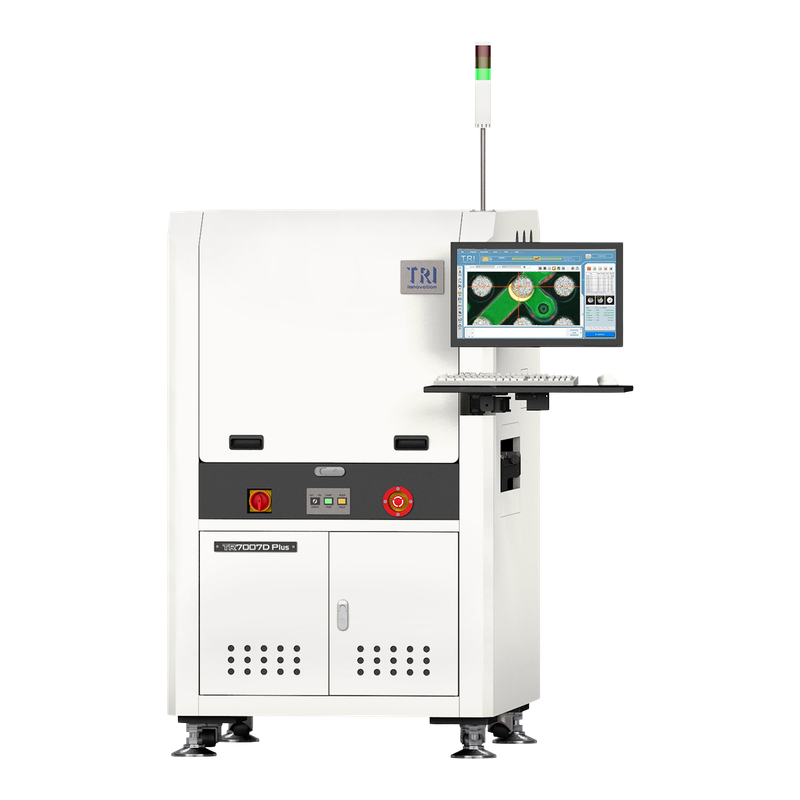
Current manufacturer model descriptions checked 5 October 2026; numbers remain version-specific. Figures describe standard model configurations, not stock or an offered unit. Dimensions are listed in the source order and exclude the tower light where stated. The representative TR7007D-DI-Plus image is not proof of another version or an offered unit’s condition. Request nameplate, configuration and board-trial evidence before selection.
| D/di plus projection | Two-way digital fringe projection |
|---|---|
| D/di plus camera choices | 4 MP or 12 MP factory configuration |
| D/di plus sampling choices | 5.5, 6, 10, 12 or 15 µm factory configurations; board envelope depends on configuration |
| D sii camera choices | 21 MP or 25 MP factory configuration |
| D sii sensing | Two projectors, wide-spectrum illumination and optional coaxial light described |
| Generation boundary | Board handling and options stay assigned to the actual version; not all catalogue maxima coexist |
The offer must identify D/DI Plus or D SII nameplate, camera, sampling configuration, conveyor envelope and software interfaces; Paste reference samples, repeatability, warped-board trial, false-call review and export/feedback trace.
TRI TR7007D Series selection should begin with production requirements and evidence, not with a model name alone.
A TRI TR7007D enquiry should state whether the offer is D/DI Plus or D SII and identify the camera and factory sampling configuration. The best sampling, largest board envelope and fastest scan do not necessarily describe one machine. Ask the seller to photograph the nameplate and configuration screen and provide the matching manufacturer table. The representative D/DI Plus image on this family page is not proof that a D SII unit, coaxial light or every software option is included.
For TR7007D acceptance, define small and large deposits, fine gaps, reflective pad backgrounds and intentionally labelled insufficient, excessive, offset and bridge examples. Keep an independent reference method and agreed decision limits. Repeat measurement without changing the sample, then include a representative warped board. Record raw height, area and volume as well as pass/fail labels. A colorful 3D view is useful context, not proof of calibrated measurement accuracy on your deposit geometry.
Ask the TR7007D seller to show the programmed board revision, measured defect, operator verification and retained result. If closed-loop or MES exchange is required, identify the fitted license and demonstrate the complete supported transaction with the intended upstream equipment. Network connectivity is not proof of an installed feedback function. Measure full-board inspection and review time on the sample, and retain false calls and missed examples rather than only the fastest acceptable board.
TRI TR7007D Series should be evaluated against the buyer’s inline measurement of paste height, area, volume and position after printing, with defect review and supported process-data exchange. The final application fit depends on the evidence for the specific unit.
These questions keep the quotation scope connected to the buyer’s real SMT process.
TRI TR7007D Series buyers should confirm this with actual-machine evidence before quotation.
TRI TR7007D Series buyers should confirm this with actual-machine evidence before quotation.
TRI TR7007D Series buyers should confirm this with actual-machine evidence before quotation.
Before shipment, review the relevant power-on, movement, operating state and visible condition for the specific offered unit.
Request a dated operating sequence of the offered TRI TR7007D Series. The model-image control requests evidence, not playback of a recorded video.
Request a unit-specific TRI TR7007D Series list for calibration references, optical and illumination modules, conveyor service items and licensed analysis/interface software. Availability is not claimed on this review page.
Provide target assembly, process requirements, d/di plus projection, installed configuration and destination, required accessories and desired inspection evidence for the proposed TRI TR7007D Series.
Common questions for overseas buyers evaluating a TRI TR7007D Series.
Inline measurement of paste height, area, volume and position after printing, with defect review and supported process-data exchange. Select the D generation around deposit size, board handling and a repeatable reference trial. SPI measurements do not prove post-reflow solder-joint quality or electrical performance.
D/DI Plus or D SII nameplate, camera, sampling configuration, conveyor envelope and software interfaces. Request the exact nameplate and option list.
The TRI TR7007D Series illustration is model-reference imagery, not a dated stock photograph. Serial, location, condition, price and running evidence require separate confirmation.
The V3 scrolling proof gallery is retained. It describes LCSMT export preparation, not the condition of a particular TRI TR7007D Series unit.
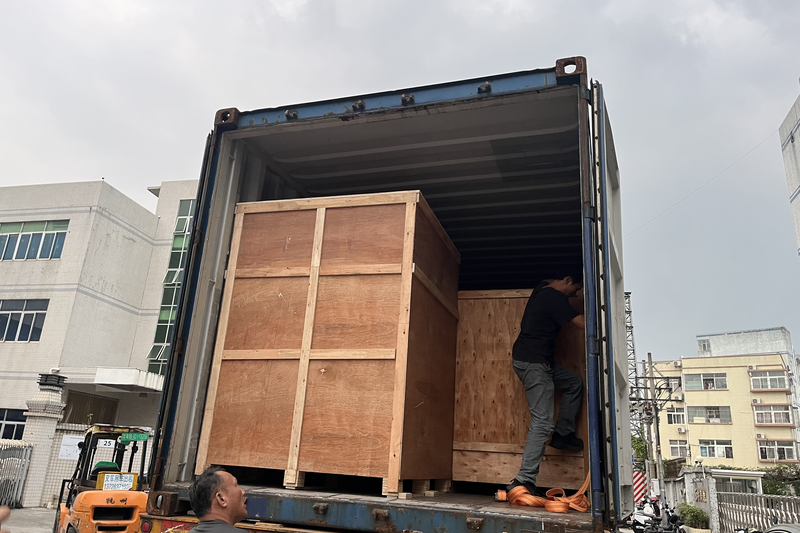
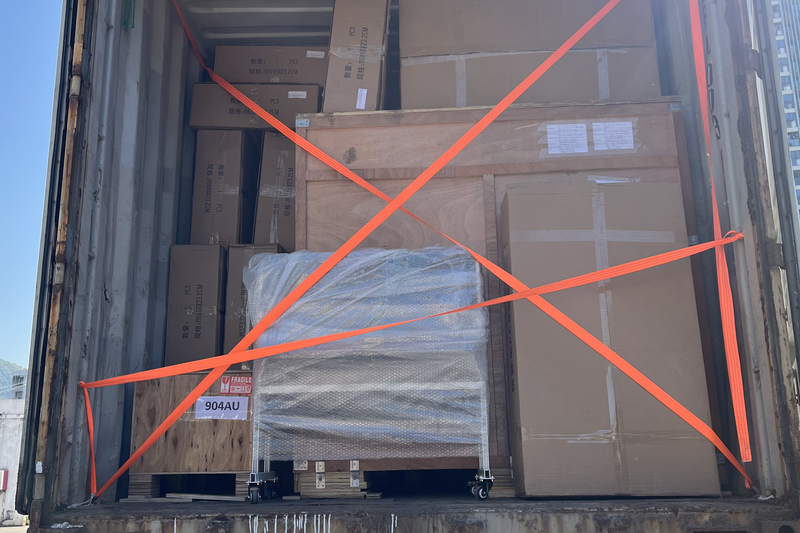
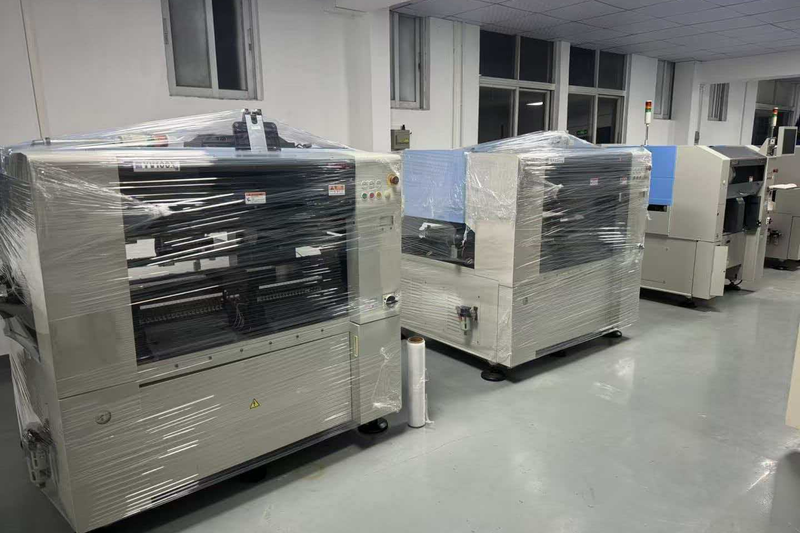
Share target assembly, process requirements, d/di plus projection, installed configuration and destination and inspection expectations. LCSMT can review whether an actual TRI TR7007D Series configuration is a practical match.