
Buyer decision 1
Why a successful handshake can still produce a bad transfer
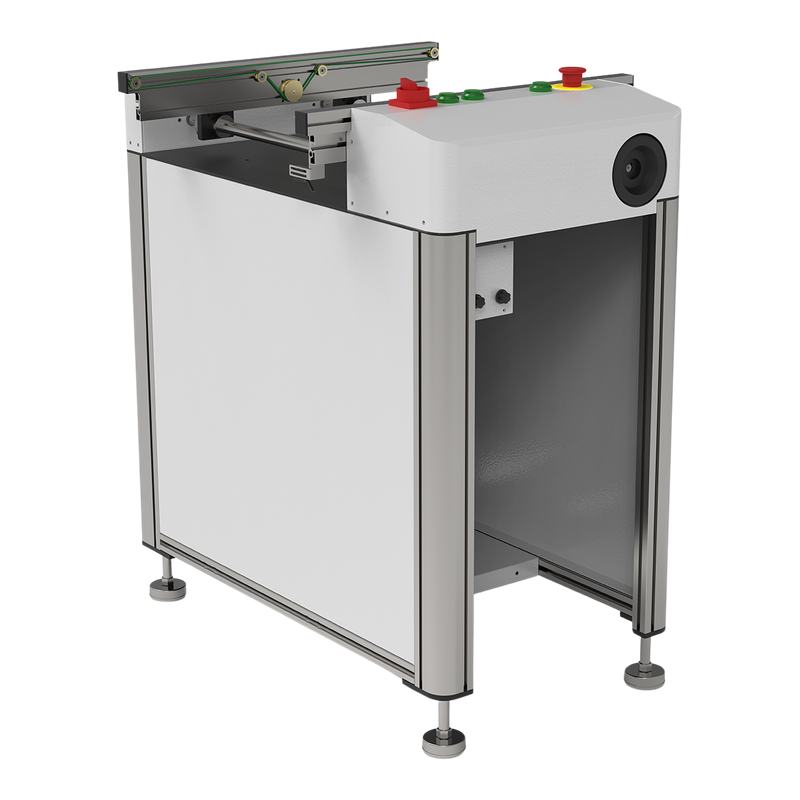
The sending machine can see a ready signal while the receiving rails are physically unsuitable for the board. A small height step, unsupported leading edge or protruding underside component can turn a normal transfer into a catch. Begin with the real assembly, its travel orientation and the two adjacent machines. Signal compatibility belongs in the same review, but it cannot establish mechanical fit. The useful acceptance record identifies where the board is supported from entry to exit and where either machine owns the movement.
Buyer decision 2
Measure the complete board envelope
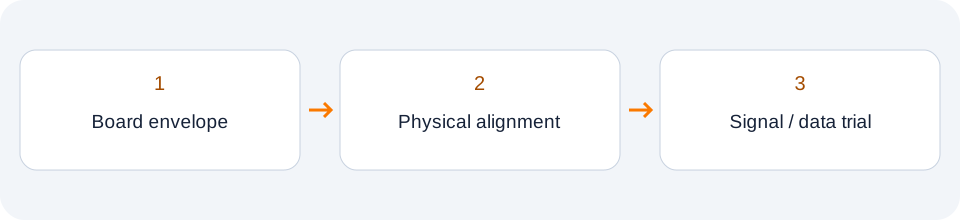
Record board length, width, thickness, weight, edge keep-outs, top and bottom component heights, connectors and any carrier. Mark which rail remains fixed during width adjustment. Measure both conveyor heights at the actual support surface, then check the gap, rail ends and transfer overlap. A nominal adjustable height is a machine specification, not a promise that the two installed sections align. Photograph the leading edge at the handoff using an agreed safe inspection method. Include the widest and shortest board; they expose different support and sensor problems.
Buyer decision 3
Separate transport permission from board identity
Document the installed interface, connector, pin assignment and signal meaning on both sides. A ready-to-transfer exchange answers a transport question. Board identity and recipe data require their own implemented data path. The Hermes standard describes an open TCP/IP-based approach to board handover information; a brochure listing Hermes as an option does not prove it is enabled on the offered controller. Request the controller version, configured interface and a demonstration using identified boards. Keep any fallback mode visible in the acceptance record.
Buyer decision 4
Test ordinary transfer and deliberate pauses
Use a numbered sample sequence at the planned width and cadence. Observe detection, release, crossing, receiving detection and the point at which the sender accepts the next board. Then include a downstream pause, an occupied receiving section and a controlled restart. Agree these tests with the commissioning team; do not defeat guards or create a jam by hand. Record which board remains where, whether upstream feeding is inhibited and how the operator clears the condition. A short moving-belt clip cannot establish this complete sequence.
Buyer decision 5
Build an RFQ that can be answered
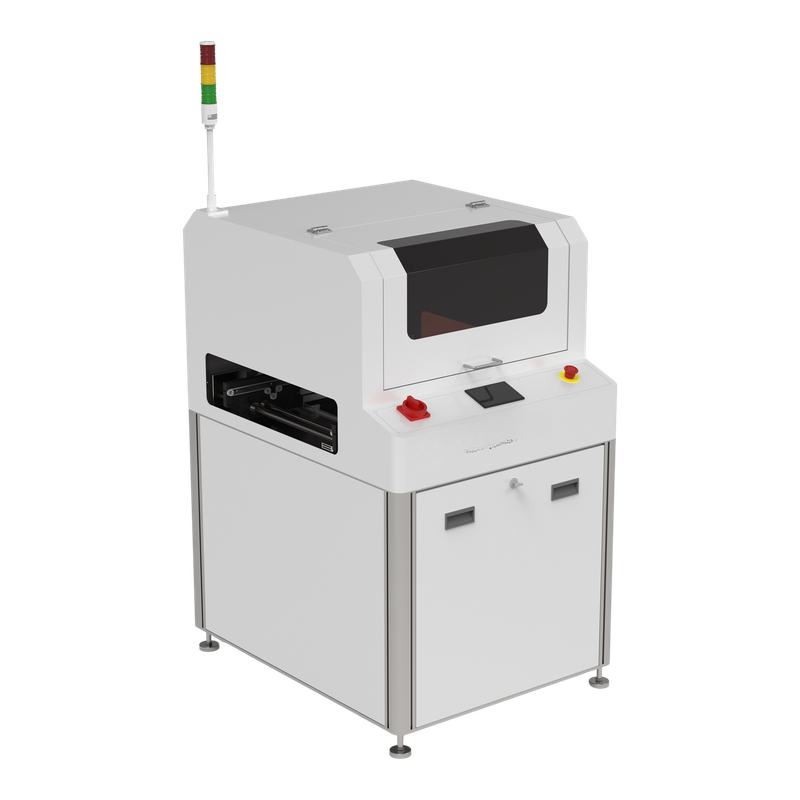
Send a dimensioned line sketch, board envelope, fixed-rail choice, operating side, required conveyor length and interface version. Request the actual-unit nameplate, rail and belt photographs, sensor positions, option list, utilities and a witnessed transfer record. For a linking-conveyor family, quote the selected length explicitly. The Vanstron source groups several lengths while its title and reference table differ; that is a reason to obtain the offered drawing, not to guess the length from its photograph. Preserve the test board revision alongside the evidence.
Buyer decision 6
What this check establishes
A successful trial supports the tested board, alignment, controller settings and neighboring machines. It does not certify every future product or a different rail arrangement. Repeat the relevant qualification when the board envelope, carrier, conveyor length or control interface changes. Do not borrow a clearance figure from a different member of a manufacturer range. These checks are a buying framework; final acceptance limits belong to the buyer drawing, equipment documentation and commissioning plan, rather than a universal threshold invented for this article.
Technical Sources
Published context and applicability
Source-backed model examples support this buyer framework. No LCSMT field test, offered-unit result or stock is asserted.