
Buyer decision 1
Draw the required movement in plain language
Begin with a plan view of the line and mark the incoming board edge, top side, fixed rail and output position. A gate creates a passage. A shuttle moves between channels. A horizontal turn changes in-plane board orientation. A corner-transfer unit aligns a board with another line direction. A flipper changes which board side faces upward. Similar control panels or chassis widths do not make these functions interchangeable. Add arrows for the actual movement rather than asking for a generic turning conveyor and expecting the supplier to infer the layout.
Buyer decision 2
Specify the access state and board-transfer state
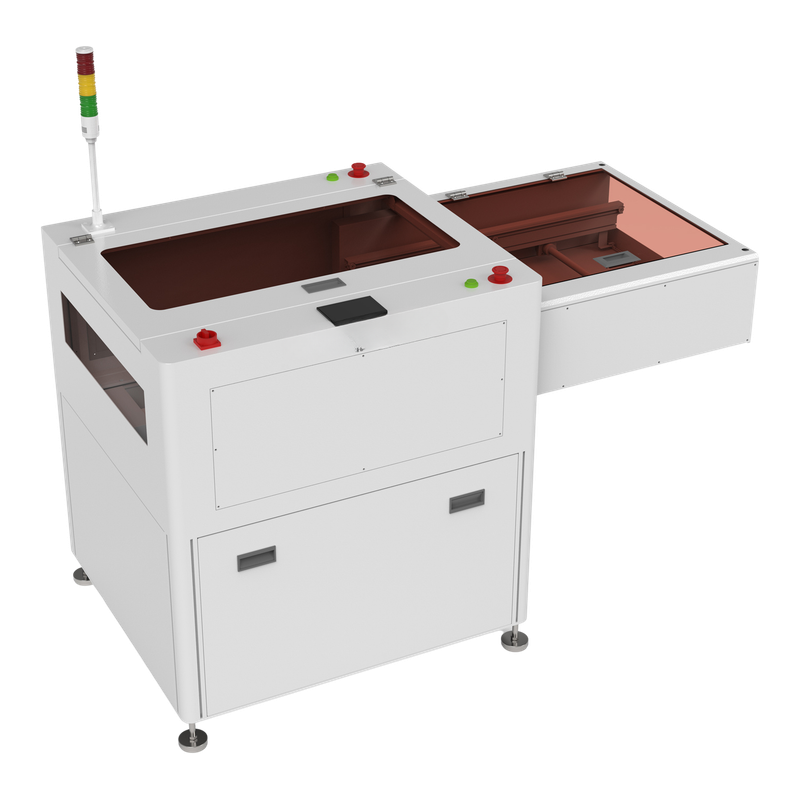
For a telescopic gate, define the required passage, normal-open or normal-closed behavior and the sequence that restores transport. Identify where an approaching board waits before access is granted. The Vanstron source gives a six-hundred-millimeter reference passage, but that figure does not certify a complete pedestrian route or the installed safety arrangement. Ask for the moving-section drawing, interlocks and adjacent-machine handshake. Commissioning should demonstrate an occupied section, a board approaching and a controlled restart using the equipment procedure, without improvising a safety test.
Buyer decision 3
Test routing when both sides want the carriage
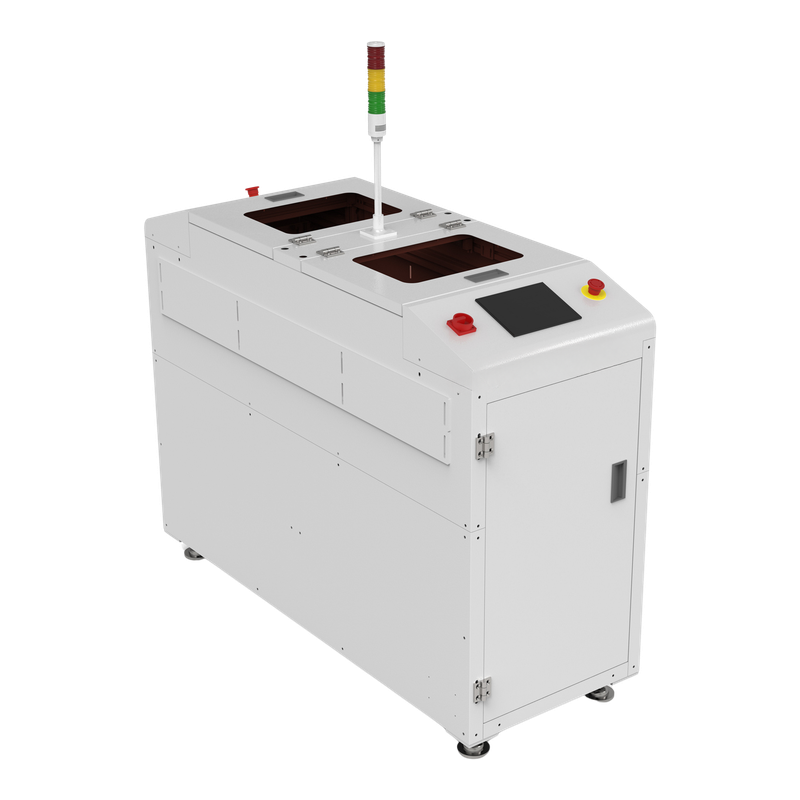
A shuttle adds travel and contention to a line. Specify the input/output topology, destination priorities, travel distance and whether reject routing is included. The TRS source describes several arrangements; they are alternatives requiring configuration, not simultaneous guaranteed capabilities. During a trial, present identified boards at competing inputs and make one output unavailable. Record which request wins, where the other board waits and how the controller prevents movement toward an occupied destination. Include the farthest traverse and actual board weight when measuring the complete cycle.
Buyer decision 4
Keep orientation and corner transfer distinct
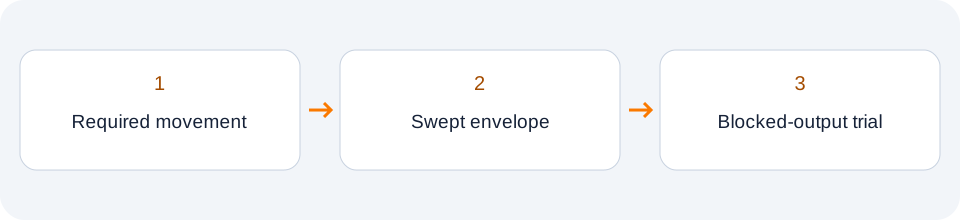
A board rotated in its plane changes the relationship between its length and width and the receiving rails. A corner-transfer carriage also needs to reach the next line position and return home. Request the incoming/outgoing axis drawing and the complete movement sequence. Check the swept component envelope, carriage alignment and support throughout delivery. If the process needs second-side handling, specify inversion separately and check both populated sides. Never substitute a ninety-degree in-plane rotation for a one-hundred-eighty-degree flip merely because both are described informally as turning.
Buyer decision 5
Reserve space for maintenance and recovery
The cabinet footprint leaves out moving sections, open doors, magazine access and operator recovery space. Put these envelopes on the line drawing with the intended operating side. Record utilities, control connectors and the fixed-rail choice at every handoff. Ask how a board is held if the next machine stops during a movement and how the operator identifies it after recovery. Preserve this sequence with the layout revision. A quotation that names only maximum PCB width cannot establish a workable gate, shuttle or corner position.
Buyer decision 6
Ask for one witnessed sequence per required mode
Use numbered representative boards and test the required normal, bypass, blocked-output and recovery states under the commissioning plan. Record installed options separately from advertised possibilities. A successful trial establishes the tested layout, board envelope and controller configuration; changing the destination, board orientation or travel distance can require another qualification. The pictured gate and shuttle are manufacturer references. They do not prove an available unit or the quoted routing configuration. The purpose diagrams and supplier drawings should carry the actual layout decision rather than an unrelated reference photograph.
Technical Sources
Published context and applicability
Source-backed model examples support this buyer framework. No LCSMT field test, offered-unit result or stock is asserted.
www.vanstron.com · technical context