
One short nozzle name can hide three different questions
A buyer may request a familiar nozzle name while a seller quotes a base part number and sends a photograph of a labelled package. Those records may all concern the same general product discussion, but they do not automatically establish the exact item, revision or quantity being offered.
Keep three fields separate from the start: the model marking visible on the nozzle, the complete ordering reference and the offered supply scope. The aim is a quotation that can be checked, not a longer keyword description of a “compatible SMT nozzle”.
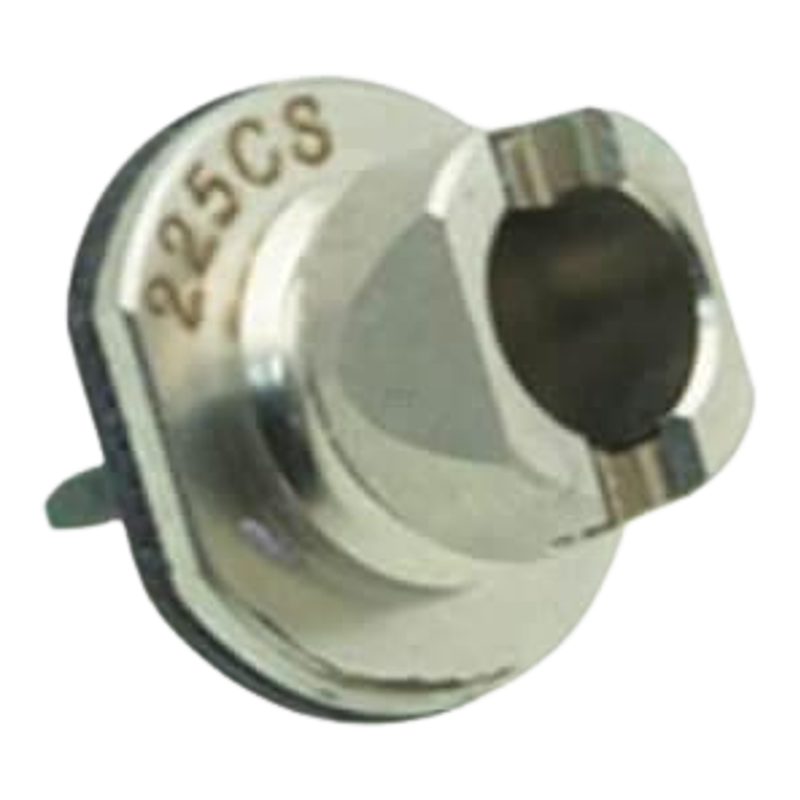
225CS: a visible model mark is not an ordering suffix
The retained Panasonic 225CS reference shows the 225CS marking. Its supplier lists N610040786AA, N610040786AB and N610040786AD alongside that model. The photograph does not establish which of those suffixes belongs to an offered item.
The useful action is to ask for the full offered code and its own identity evidence. Do not rename the same photo three times and treat that as three verified variants. No supersession relationship between AA, AB and AD is established here, and a broad machine-family description does not settle the actual head or nozzle-station requirement.
733/933: preserve the difference between a base number and a label
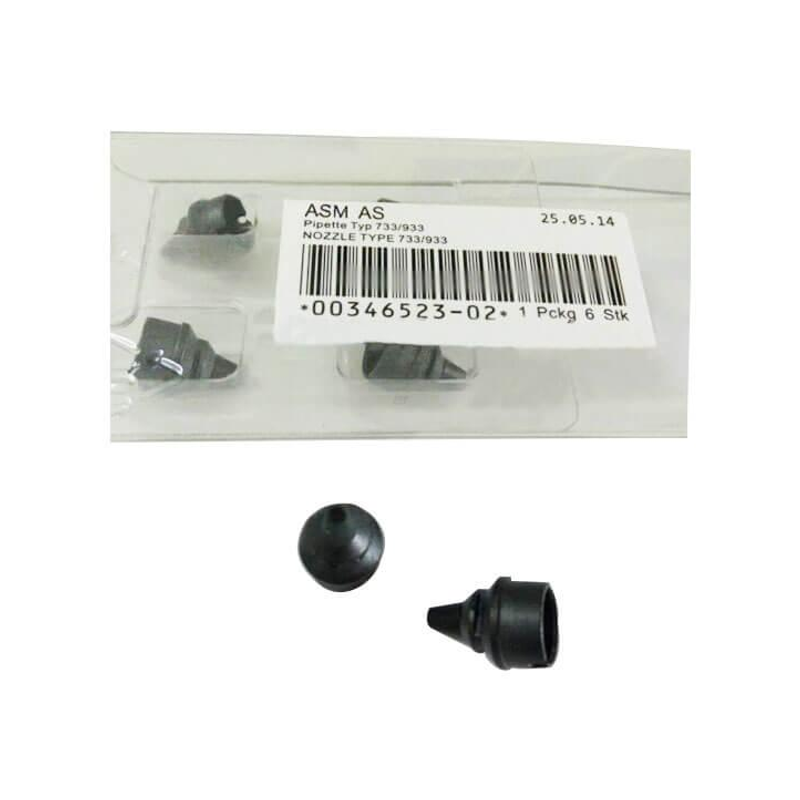
The SIPLACE 733/933 reference is listed under 00346523, while its retained package photo includes the longer code 00346523-02. Keep that difference visible in the enquiry instead of deleting the suffix to make the records look identical.
This example also separates identity from quantity. The photograph contains loose views and a bag with printed packing information. It is not a current lot declaration or an inspection record for every item in a new quotation. Ask the seller to state whether the offer is for individual nozzles, a sealed package or a mixed lot, and to identify the quantity independently.
Give each supplier the same bounded RFQ
- Required identity: the installed model mark and complete ordering reference, retaining suffixes exactly as recorded.
- Application context: the actual machine, head or station and the component-handling requirement that the responsible team needs to check.
- Offered scope: full offered reference, declared maker and condition, loose or packaged supply, and quantity.
- Evidence: readable offered-item or package labels, relevant photographs and the agreed identity/condition acceptance scope.
If the seller proposes a different code, keep it in a separate alternative line. An alternative should not overwrite the requested reference before its application basis has been reviewed.
Compare quotations only after the identity fields agree
First flag differences in code, revision, quantity, packaging and declared condition. A lower line price is not yet a meaningful comparison if one offer is a loose item and another is a package with a different stated quantity. Resolve those differences before comparing the commercial terms.
Then separate identity evidence from performance evidence. A readable label can support the first; it does not establish tip wear, cleanliness, vacuum behaviour or production acceptance. Ask what condition assessment is actually included. Manufacturer service support can help frame an appropriate assessment, but a general support page is not a test certificate for these examples.
Avoid cross-family assumptions and record the unresolved items
These Panasonic and SIPLACE examples illustrate two different RFQ problems. They are not proposed substitutes for one another. Similar tip appearance, a shared nozzle category or a supplier's broad machine list does not establish interface or component compatibility.
- Do not infer a full ordering code from a short engraved model mark.
- Do not drop a photographed suffix from the enquiry.
- Do not count catalogue views as different inspected items.
- Do not turn label legibility into authenticity, stock or test claims.
Close the comparison with an exact requested identity, the seller's exact offered identity, the agreed quantity and a short list of unresolved application or condition questions. If those questions remain open, the quotation can still be discussed; the part should not be described as an approved replacement.
Technical sources and catalogue examples
Supplier listings and photographs identify the two catalogue examples. JUKI supplies general service-assessment context, not approval of these Panasonic or SIPLACE references. The RFQ comparison is editorial synthesis.
JUKI: condition assessment and maintenance support context
SMT Panasonic 225CS NPM CM602 Nozzle N610040786AA N610040786AB N610040786AD