Home / JT Equipment / JT NIS series
Model guide · unit evidence required
OverviewJT NIS series Selective Soldering Machine
The JT NIS series integrates fluxing, preheating and selective soldering, with two solder pots and independently controlled lifting. Use a bottom-side drawing and populated sample to assess nozzle clearance and joint access. Do not infer a board-size limit from a malformed source value.
Manufacturer-published model data
JT NIS series Technical Specifications
| Process modules | Integrated fluxing, preheat and selective soldering |
|---|---|
| Solder-pot arrangement | Two solder pots with independent lifting described by JT |
| Programming | Offline programming and Gerber import described by JT |
| Process observation | CCD observation of the soldering sequence |
Manufacturer model data · Important: model-level figures and features are conditional manufacturer information, not guarantees for a particular used JT NIS series unit.
Key Features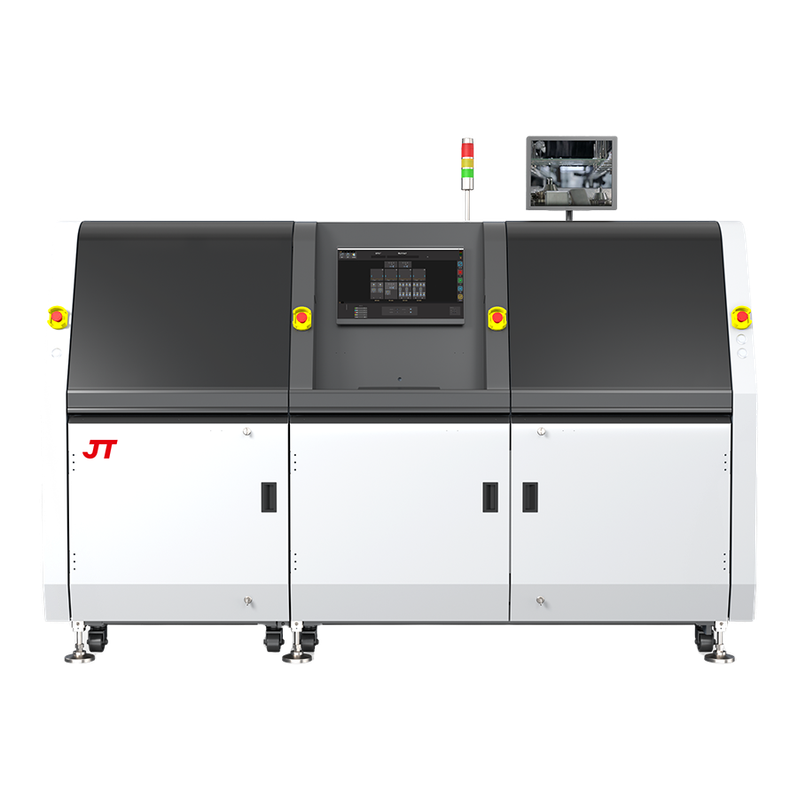
Configuration Must Be Verified
The offer must identify Installed nozzle set, pot arrangement, fluxing method, preheater and software scope; Joint-access trial, program handoff, nozzle motion, temperature trace and inspection results.
Buyer decision guide
When JT NIS series Makes Sense — and When It May Not
JT NIS series selection should begin with production requirements and evidence, not with a model name alone.
Application qualification
JT NIS series Acceptance Plan
Make a bottom-side access map
For NIS selection, supply a drawing showing joints to solder, neighboring parts, keep-out zones, fixture boundaries and conveyor support. Ask which nozzle reaches each joint and whether any contact or thermal risk remains. A large-board headline cannot resolve access to one obstructed connector. Numerical board limits remain unconfirmed here because the source contains an inconsistent unit.
Separate two-pot capability from cycle promises
The NIS description includes two pots and independent lift control, but that does not guarantee that every program runs twice as fast. Ask the seller to demonstrate the actual pot allocation and sequence for your joint map. Record travel, preheat, soldering, transfer and any intervention as a complete cycle rather than quoting only nozzle dwell time.
Keep programming and result evidence
Request the program revision, imported board data, nozzle positions and a dated view of the installed machine before the trial. Keep initial, repeated and restart samples; inspect the agreed joints and note every setting change. The CCD view is useful process context, but it is not by itself proof of hidden-joint quality or electrical performance.
Typical Applications
Typical Applications for JT NIS series
JT NIS series should be evaluated against the buyer’s programmed through-hole soldering where selected joints need nozzle access without exposing the whole assembly to a full-width wave. The final application fit depends on the evidence for the specific unit.
Before quotation
Three JT NIS series Buyer Questions
These questions keep the quotation scope connected to the buyer’s real SMT process.
1
Which process modules requirement must the proposed JT NIS series demonstrate?
JT NIS series buyers should confirm this with actual-machine evidence before quotation.
2
What is included in this JT NIS series offer: installed nozzle set, pot arrangement, fluxing method, preheater and software scope?
JT NIS series buyers should confirm this with actual-machine evidence before quotation.
3
Can the JT NIS series acceptance run document joint-access trial, program handoff, nozzle motion, temperature trace and inspection results?
JT NIS series buyers should confirm this with actual-machine evidence before quotation.
Running video confirmation
JT NIS series Running Video Review
Before shipment, review the relevant power-on, movement, operating state and visible condition for the specific offered unit.
Request an operating sequence of the offered JT NIS series. The model-image control requests evidence; it does not play a recorded video.
- Power-on and visible operating-state confirmation
- Programmed through-hole soldering where selected joints need nozzle access without exposing the whole assembly to a full-width wave.
- Unit-specific condition evidence before export packing
Used-machine inspection
Inspection and Export Preparation for an Actual JT NIS series
- Nameplate and configurationModel, serial, year, voltage and installed options.
- Machine configurationMechanical, transport, sensing, camera, software and motion condition relevant to the quoted JT NIS series.
- Transport and softwareConveyor, sensors, program and line-interface evidence where applicable.
- Running and packing proofPower-on evidence, visible operation and export packing records.
Spare Parts
JT NIS series Spare Parts Scope
Request a unit-specific JT NIS series list for selective solder nozzles, pump service items, fluxing consumables, filters, motion parts and calibration accessories. Availability is not claimed on this review page.
Quotation checklist
Provide target assembly, process requirements, process modules, installed configuration and destination, required accessories and desired inspection evidence for the proposed JT NIS series.
FAQ
Common questions for overseas buyers evaluating a JT NIS series.
01Application
Which production task suits JT NIS series?
Programmed through-hole soldering where selected joints need nozzle access without exposing the whole assembly to a full-width wave. Use a bottom-side drawing and populated sample to assess nozzle clearance and joint access. Do not infer a board-size limit from a malformed source value.
02Configuration
What should a buyer confirm for JT NIS series?
Installed nozzle set, pot arrangement, fluxing method, preheater and software scope. Request the exact nameplate and option list.
03Unit evidence
Does this JT NIS series illustration prove stock?
The JT NIS series illustration is model-reference imagery, not a dated stock photograph. Serial, location, condition, price and running evidence require separate confirmation.
Export packing proof
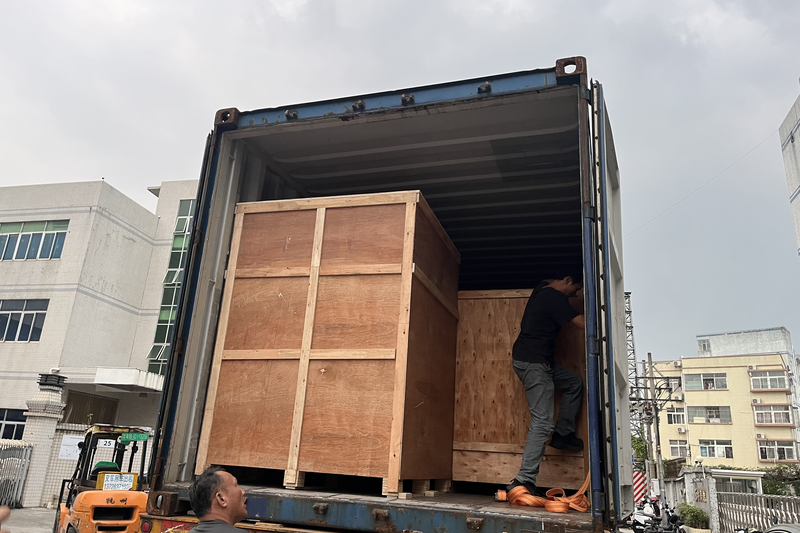
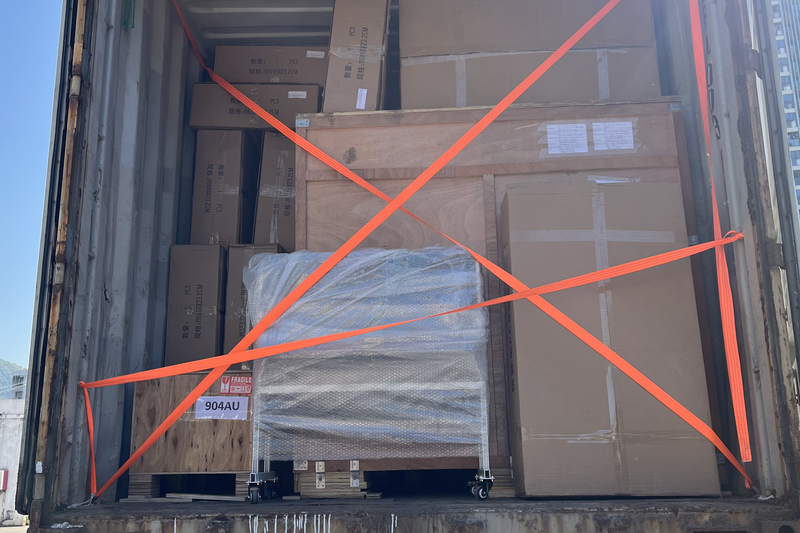
Export Packing and Container Loading
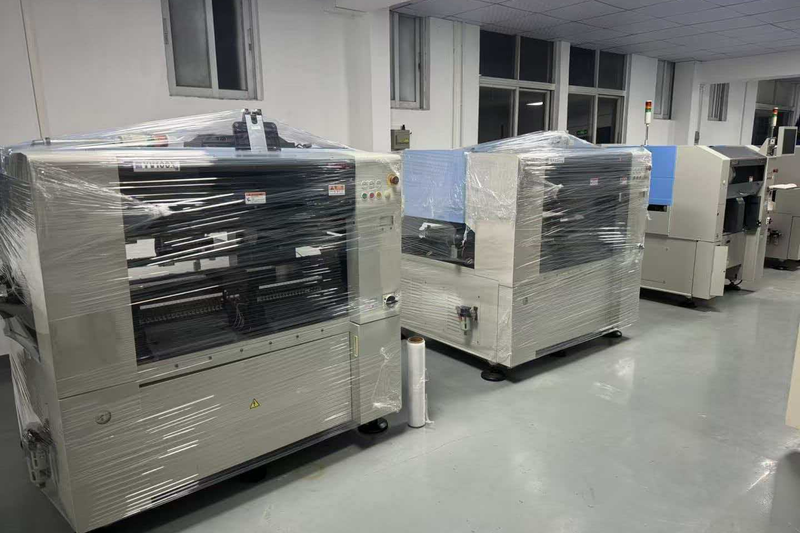
The V3 scrolling proof gallery is retained. It describes LCSMT export preparation, not the condition of a particular JT NIS series unit.
Send Your JT NIS series Production Requirement
Share target assembly, process requirements, process modules, installed configuration and destination and inspection expectations. LCSMT can review whether an actual JT NIS series configuration is a practical match.