
Home / JUKI Equipment / JUKI RX-7R
Model guide · unit evidence required
OverviewJUKI RX-7R High-speed Compact Mounter
JUKI RX-7R is a compact small-component placement platform centred on the P16S rotary-head design and enlarged dual-board handling. It is not a duplicate flexible-head RX-6R or a re-labelled RX-8. Select RX-7R around the small-component population and lane setup. Do not assume the optional P8 range, dual lanes or trolleys are included in every offer.
Manufacturer-published model data
JUKI RX-7R Technical Specifications
| Optimum placement rate | 75,000 CPH under optimum manufacturer conditions, not an IPC-9850 rate |
|---|---|
| Dual-lane board capability | Two L-size boards, each up to 420 × 450 mm, in the described dual-lane configuration |
| Machine width | 998 mm in the manufacturer release |
| P16s component range | 0.3 × 0.15 mm to 5 mm square; up to 3 mm height |
| Optional p8 range | 0.6 × 0.3 mm to 25 mm square; up to 10.5 mm height |
| Configuration choices | Fixed banks or feeder trolleys; single- or dual-lane conveyor |
Manufacturer model data · Important: model-level figures and features are conditional manufacturer information, not guarantees for a particular used JUKI RX-7R unit.
Key Features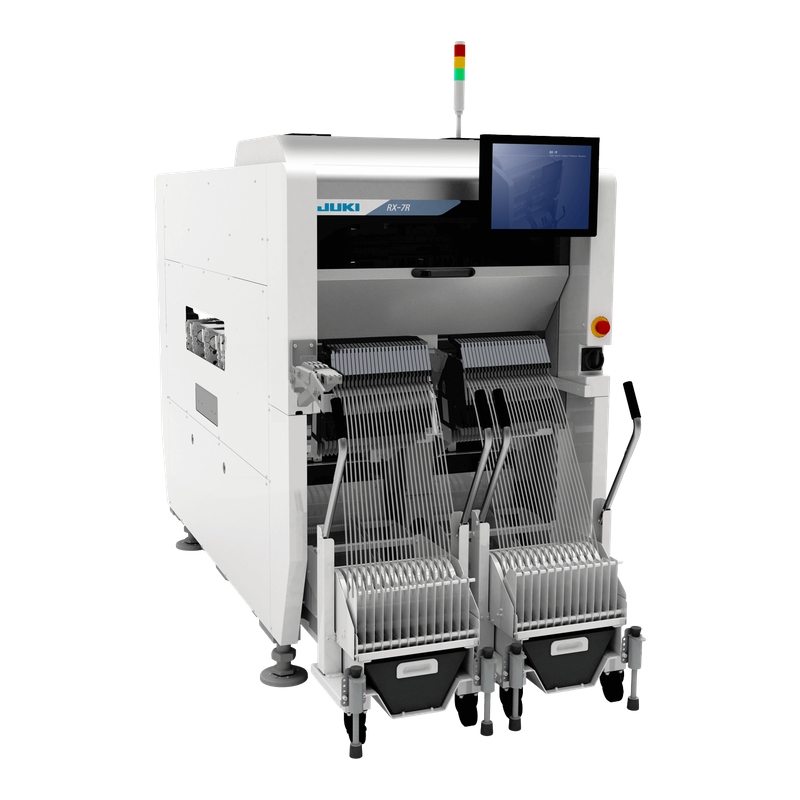
Configuration Must Be Verified
The offer must identify RX-7R serial, P16S/P8 head configuration, fixed-bank/trolley arrangement, feeder inventory and lane setup; Actual-component recognition, angular placement, low-impact settings, dual-board transport and program recovery.
Buyer decision guide
When JUKI RX-7R Makes Sense — and When It May Not
JUKI RX-7R selection should begin with production requirements and evidence, not with a model name alone.
Application qualification
JUKI RX-7R Acceptance Plan
Compare the two heads honestly
For RX-7R selection, list the components that will run on P16S and those that would require the optional P8 configuration or a separate flexible machine. Include package height and recognition surfaces, not just footprint. Witness pickup, recognition and placement with the intended nozzle and feeder. Do not combine the smallest P16S component, the largest P8 component and the optimum catalogue rate into one promised production capability.
Demonstrate the lane arrangement
Ask whether the offered RX-7R has single or dual lanes and whether it uses fixed feeder banks or changeover trolleys. For two L-size boards, demonstrate both transfer paths and support conditions with the actual program and feeder population. Record board width, spacing and the downstream transfer sequence. The compact 998 mm cabinet width does not replace installation, trolley-clearance or service-access planning.
Retain placement and recovery evidence
Use representative small chips and angularly sensitive LEDs to evaluate recognition, orientation and final placement. If low-impact movement is required, retain the settings and a board trial rather than a generic brochure claim. Request nozzle condition, calibration, maintenance and program-recovery records for the serial. Shenzhen supplier pages provide independent model enquiries, but their inventory and tested-condition statements are not LCSMT unit evidence.
Typical Applications
Typical Applications for JUKI RX-7R
JUKI RX-7R should be evaluated against the buyer’s high-speed chip, small-ic and suitable led placement, paired with a flexible machine where the component range requires it. The final application fit depends on the evidence for the specific unit.
Before quotation
Three JUKI RX-7R Buyer Questions
These questions keep the quotation scope connected to the buyer’s real SMT process.
1
Which optimum placement rate requirement must the proposed JUKI RX-7R demonstrate?
JUKI RX-7R buyers should confirm this with actual-machine evidence before quotation.
2
What is included in this JUKI RX-7R offer: rx-7r serial, p16s/p8 head configuration, fixed-bank/trolley arrangement, feeder inventory and lane setup?
JUKI RX-7R buyers should confirm this with actual-machine evidence before quotation.
3
Can the JUKI RX-7R acceptance run document actual-component recognition, angular placement, low-impact settings, dual-board transport and program recovery?
JUKI RX-7R buyers should confirm this with actual-machine evidence before quotation.
Running video confirmation
JUKI RX-7R Running Video Review
Before shipment, review the relevant power-on, movement, operating state and visible condition for the specific offered unit.
Request a dated operating sequence of the offered JUKI RX-7R. The model-image control requests evidence, not playback of a recorded video.
- Power-on and visible operating-state confirmation
- High-speed chip, small-IC and suitable LED placement, paired with a flexible machine where the component range requires it.
- Unit-specific condition evidence before export packing
Used-machine inspection
Inspection and Export Preparation for an Actual JUKI RX-7R
- Nameplate and configurationModel, serial, year, voltage and installed options.
- Machine configurationMechanical, transport, sensing, camera, software and motion condition relevant to the quoted JUKI RX-7R.
- Transport and softwareConveyor, sensors, program and line-interface evidence where applicable.
- Running and packing proofPower-on evidence, visible operation and export packing records.
Spare Parts
JUKI RX-7R Spare Parts Scope
Request a unit-specific JUKI RX-7R list for head-specific nozzles, supported feeders and trolleys, board supports, maintenance items and authorized placement-software backups. Availability is not claimed on this review page.
Quotation checklist
Provide target assembly, process requirements, optimum placement rate, installed configuration and destination, required accessories and desired inspection evidence for the proposed JUKI RX-7R.
FAQ
Common questions for overseas buyers evaluating a JUKI RX-7R.
01Application
Which production task suits JUKI RX-7R?
High-speed chip, small-IC and suitable LED placement, paired with a flexible machine where the component range requires it. Select RX-7R around the small-component population and lane setup. Do not assume the optional P8 range, dual lanes or trolleys are included in every offer.
02Configuration
What should a buyer confirm for JUKI RX-7R?
RX-7R serial, P16S/P8 head configuration, fixed-bank/trolley arrangement, feeder inventory and lane setup. Request the exact nameplate and option list.
03Unit evidence
Does this JUKI RX-7R illustration prove stock?
The JUKI RX-7R illustration is model-reference imagery, not a dated stock photograph. Serial, location, condition, price and running evidence require separate confirmation.
Export packing proof
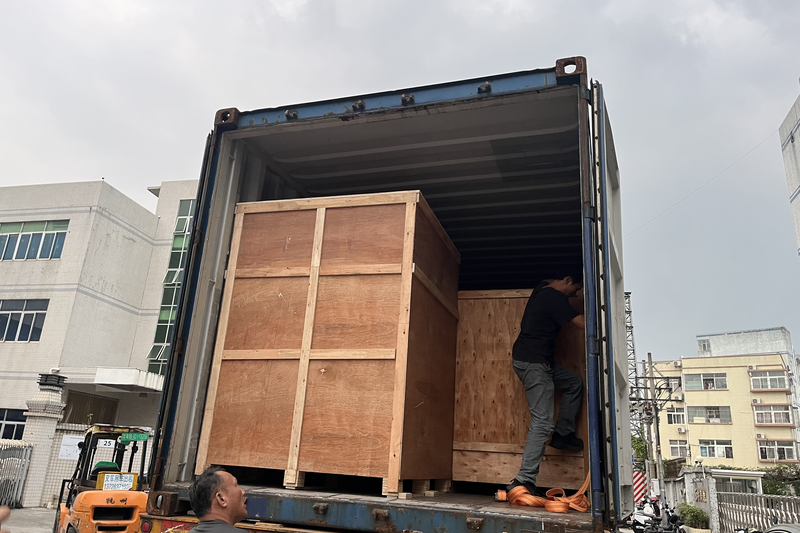
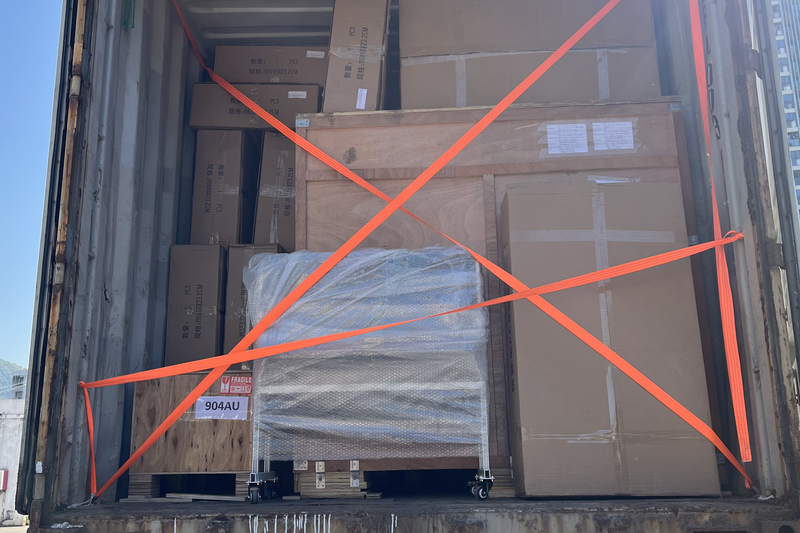
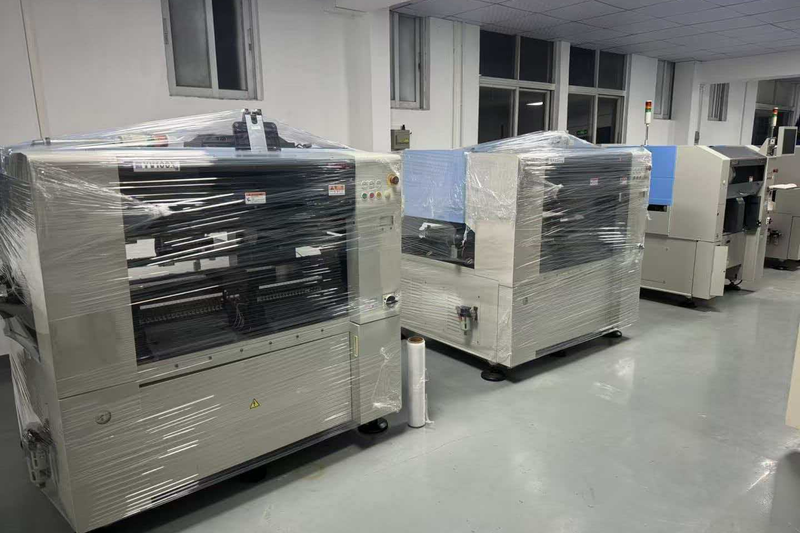
Export Packing and Container Loading
The V3 scrolling proof gallery is retained. It describes LCSMT export preparation, not the condition of a particular JUKI RX-7R unit.
Send Your JUKI RX-7R Production Requirement
Share target assembly, process requirements, optimum placement rate, installed configuration and destination and inspection expectations. LCSMT can review whether an actual JUKI RX-7R configuration is a practical match.