Standard inline configuration
MH510
- PCB range
- 50 × 50 to 510 × 460 mm
- Machine dimensions
- 1020 × 1308 × 1611 mm
- Approximate mass
- 670 kg
- Rated power
- 2 kVA
SMT equipment sourcing · inspection · packing · global delivery

Inline component and solder-joint optical inspection. Compare the standard, DH and long-board DL versions below before choosing the board envelope and installation footprint.
Inline component and solder-joint optical inspection. Select by the actual board envelope, optical configuration and installation space—not the suffix alone.
Standard inline configuration
Different conveyor / board envelope
Long-board configuration
Translated from the manufacturer brochure, pages 2, 3, 4, 5, 6. Figures describe standard model configurations, not stock or an offered unit. Dimensions are listed in the source order and exclude the tower light where stated. Shared brochure family reference; actual cabinet width depends on the selected version. Request nameplate, configuration and board-trial evidence before selection.
| PCB thickness | 0.5–6 mm |
|---|---|
| Component clearance | 40 mm top / 40 mm bottom |
| Camera | 12 MP |
| Illumination | RGB+W four-colour integrated light |
| Resolution | 10 / 15 µm |
| Published cycle | 0.25 s/FOV |
| PCB range | 50 × 50 to 510 × 460 mm |
| Machine dimensions | 1020 × 1308 × 1611 mm |
| Approximate mass | 670 kg |
| Rated power | 2 kVA |
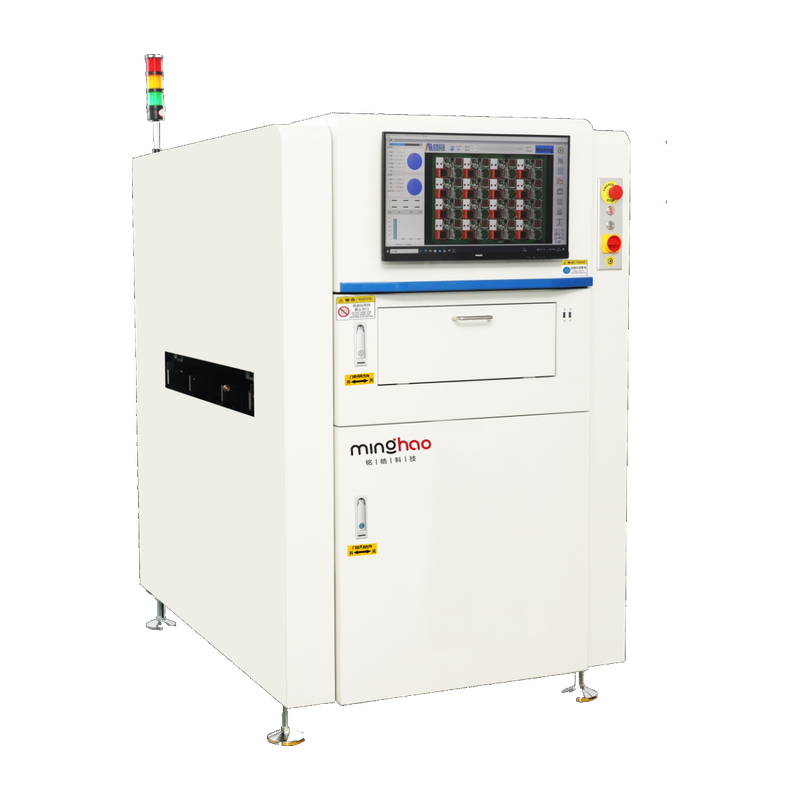
Board capacity, camera, lighting, cabinet size and power follow the selected version. Ask for a nameplate, configuration list and sample-board inspection result; a shared brochure photograph is not proof of an individual machine.
MH510 is the standard-width member of the 510 series, distinguished in the source table by 12 MP imaging and 10 μm / 15 μm configuration choices.
Shared brochure software illustrations, not proof of installed options. The selected model uses optical images; these diagrams do not imply 3D height measurement.

The brochure describes deep learning, data optimization and one-click recognition of trained components and solder joints. This section is presented as a programming and review concept, not as a claim that every defect can be recognised without application-specific training.
The buyer should verify the available software version, library, training workflow and false-call review process.
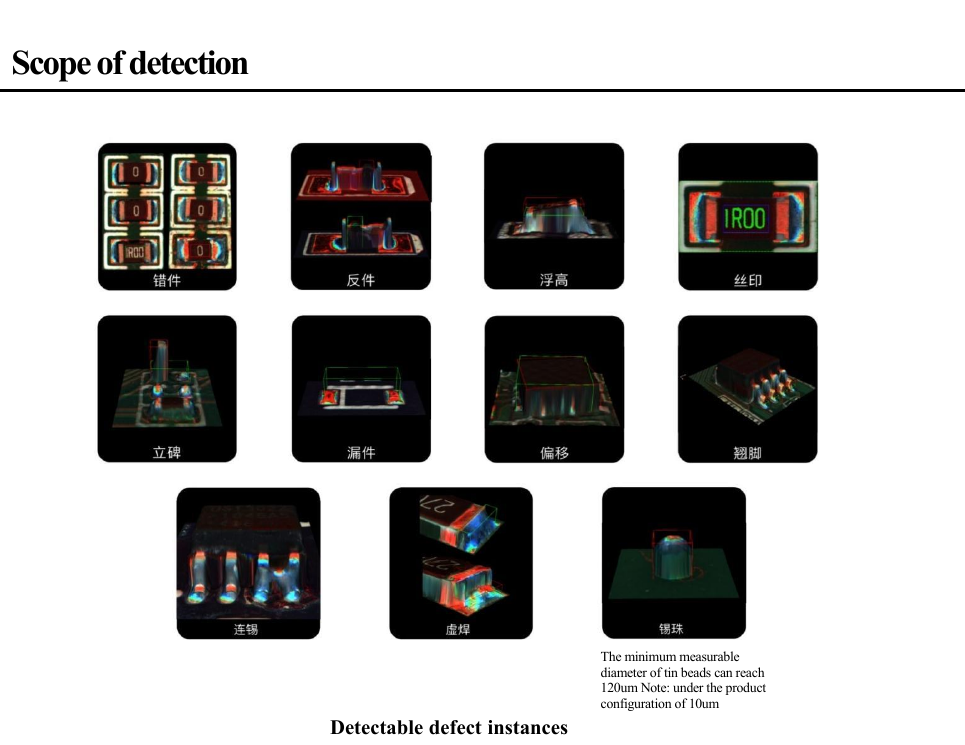
The source examples depict wrong component, reversed component, lifted component, silkscreen issue, standing component, missing component, offset, lifted lead, solder bridging, virtual soldering and solder bead conditions.
Use these examples to start a defect-library discussion; the final programmed coverage depends on the component package, solder finish, board design, image quality and acceptance criteria.
Minghao MH510 selection should begin with production requirements and evidence, not with a model name alone.
Minghao MH510 should be evaluated against the buyer’s board dimensions, defect classes, inspection program, changeover profile and required line integration. The final application fit depends on the evidence for the specific unit.
These questions keep the quotation scope connected to the buyer’s real SMT process.
Minghao MH510 buyers should confirm this with actual-machine evidence before quotation.
Minghao MH510 buyers should confirm this with actual-machine evidence before quotation.
Minghao MH510 buyers should confirm this with actual-machine evidence before quotation.
Before a purchase decision, request a dated power-on and representative operating cycle for the actual unit, including relevant transport, motion, inspection and visible-condition evidence.
Request a unit-specific Minghao MH510 list for cameras, light sources, conveyor belts, sensors, filters and recommended maintenance items. Availability is not claimed on this review page.
Provide PCB dimensions, inspection stage, throughput target, calibration evidence, voltage, destination, required accessories and desired inspection evidence for the proposed Minghao MH510.
Automated optical inspection evaluates visible assembly features. Solder paste inspection addresses deposits before placement, while X-ray inspection can address hidden joints. Compare inspection methods by the defect and process stage; one method does not establish all three capabilities.
Trial known-good and known-defect assemblies with the offered camera, lighting and software. Review repeatability, false calls, review workflow, board transfer and program recovery instead of relying on an image-resolution label alone.
For Minghao MH510, use the page’s PCB thickness, Component clearance, Camera entries as quotation checkpoints. Request evidence for the offered serial; published model data and reference images do not establish its installed options or stock.
AOI & SPI inspection · How Should Buyers Test Dual-lane AOI with Mixed Boards?
Common questions for overseas buyers evaluating a Minghao MH510.
It translates the user-supplied Minghao PDF and keeps its published configuration information separate from a machine-specific quotation.
No. Board design, program criteria, defect library, lighting configuration and calibration must be validated against the intended process.
No. It is a model guide page only; availability, condition, options and delivery require confirmation.
The V3 scrolling proof gallery is retained. It describes LCSMT export preparation, not the condition of a particular Minghao MH510 unit.
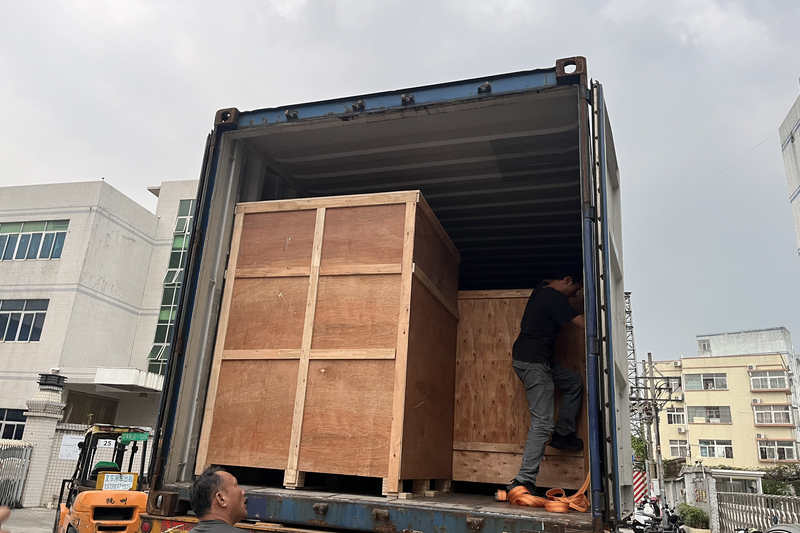
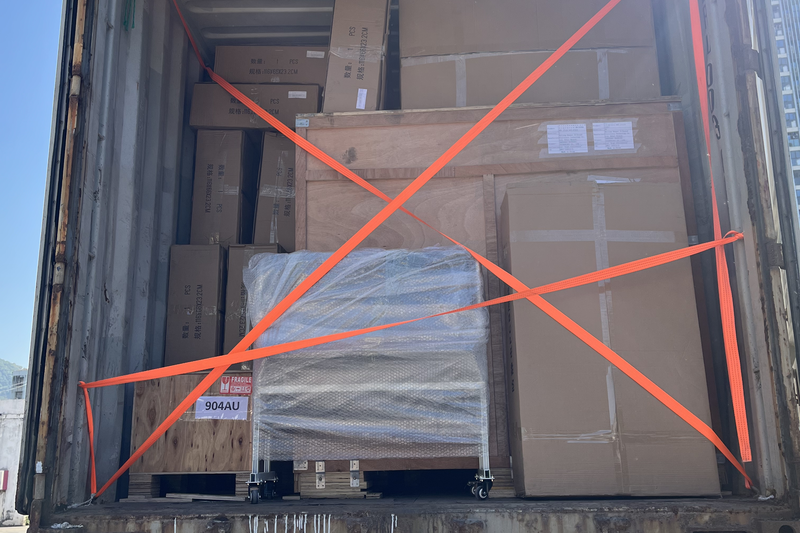
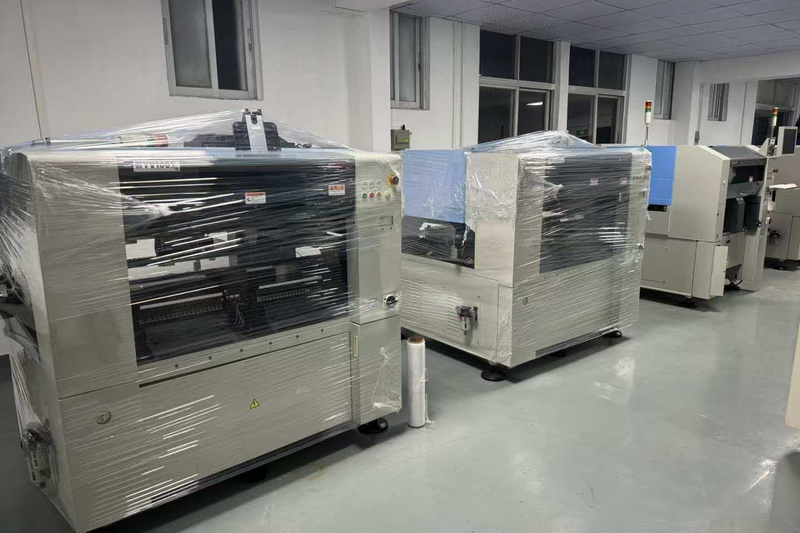
Share PCB size, defect classes, required throughput, inspection program, voltage, destination and inspection expectations. LCSMT can review whether an actual Minghao MH510 configuration is a practical match.