
Buyer decision 1
Define the two-lane job before comparing speed
Start with the actual production mix: panel sizes, component clearances, inspection programs and downstream transfer requirements. Identify whether both lanes run the same assembly or different revisions. Two conveyors can support a useful production arrangement, but a brochure picture does not establish simultaneous inspection, independent programming or double throughput. Ask the equipment supplier to describe the sequence for the installed configuration. Keep that description with the serial-specific offer, rather than transferring another generation’s lane functions into the quotation.
Buyer decision 2
Separate single-lane and dual-lane board limits
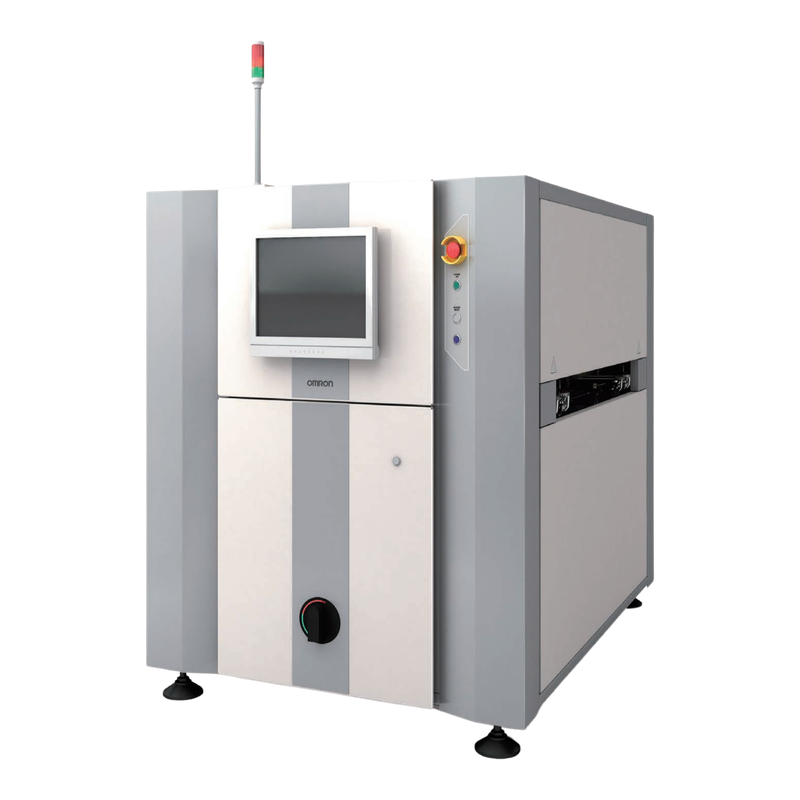
Omron’s VT-S530 catalogue distinguishes the two-lane board envelope from the wider single-lane arrangement. The applicable columns must be matched to the selected mode. Include board thickness, underside components, support rails and populated mass in the enquiry, not only length and width. Request a safe transfer demonstration using the buyer’s difficult panel. A board that fits between rails may still require different support or clearance. Do not combine the largest single-lane board with an unsupported claim about two-lane operation.
Buyer decision 3
Challenge identity and program selection on each lane
Ask the supplier to demonstrate how a panel is identified, how the correct program is selected and how its result is associated with the appropriate lane and revision. Include two visibly similar revisions in the agreed test. Have qualified personnel select a safe wrong-program challenge, without bypassing protective functions. Retain the response and recovery sequence. Barcode readers, review stations and factory interfaces may be configuration-dependent; an Ethernet connection or a screenshot does not prove those functions are installed, licensed and correctly integrated.
Buyer decision 4
Keep optics and acceptance conditions matched
Use known-good boards and independently characterized visible defects appropriate to the assembly. Keep camera setting, illumination, coverage, program and decision criteria together. Compare repeated measurements and review outcomes before comparing elapsed time. A finer sampling choice can change the inspection workload; neither megapixels nor a reconstructed image proves the required detection performance. Ask what cannot be assessed optically, particularly concealed connections. Separate the manufacturer’s measurement-height range from component clearance, and keep downstream electrical or X-ray evidence outside the AOI claim.
Buyer decision 5
Observe a rejected board while the other lane runs
Agree a safe exception sequence that includes a rejected result, review intervention and downstream handling. Record whether the second lane continues, waits or requires an operator action under the installed control logic. Do not assume independent behavior from a two-lane label. Observe how a reviewed board is released and whether its identity remains attached to the result. If the intended review arrangement is not available during the demonstration, record it as unresolved integration work, not as a tested capability or a failed machine.
Buyer decision 6
Measure useful capacity through the whole sequence
Count completed, correctly identified boards over a representative run with loading, inspection, transfer and the agreed review work included. Record the product mix and any excluded areas or interventions. Compare like conditions before declaring a capacity advantage. A published scan rate does not represent this complete process, and an uninterrupted good-board demonstration can conceal review bottlenecks. Ask for a second trial after material program changes. Retain both results so faster operation is not mistaken for equivalent coverage when the inspection task has changed.
Buyer decision 7
Make the purchase condition configuration-specific
The decision pack should identify the serial, lanes, optical configuration, programs, tested revisions, identity mapping, exception behavior and measured complete-run outcome. List outstanding interfaces, licenses and support changes with a responsible party. The conclusion applies to that setup, not every dual-lane AOI or future assembly. Common mistakes are doubling a catalogue rate, mixing lane-envelope columns and ignoring rejected-board recovery. This guide provides a buyer’s trial framework; it does not claim LCSMT has witnessed a machine trial, confirmed stock or established a universal defect acceptance threshold.
Technical Sources
Manufacturer context and limits
Checked 5 October 2026. Published model facts support the examples; the acceptance framework is buyer guidance, not claimed LCSMT field-test evidence.