Separate machine capability from repair qualification
A rework station supplies controlled heat, support and positioning. The repair method also depends on the assembly's component limits, solder alloy, moisture history and condition. Obtain those inputs before building the profile. Agree how the repair will be inspected and what makes the board unsuitable to continue. This gives the operator a decision path when damage, contamination or an unexpected temperature response appears during preparation.
Check the bottom-side heating arrangement
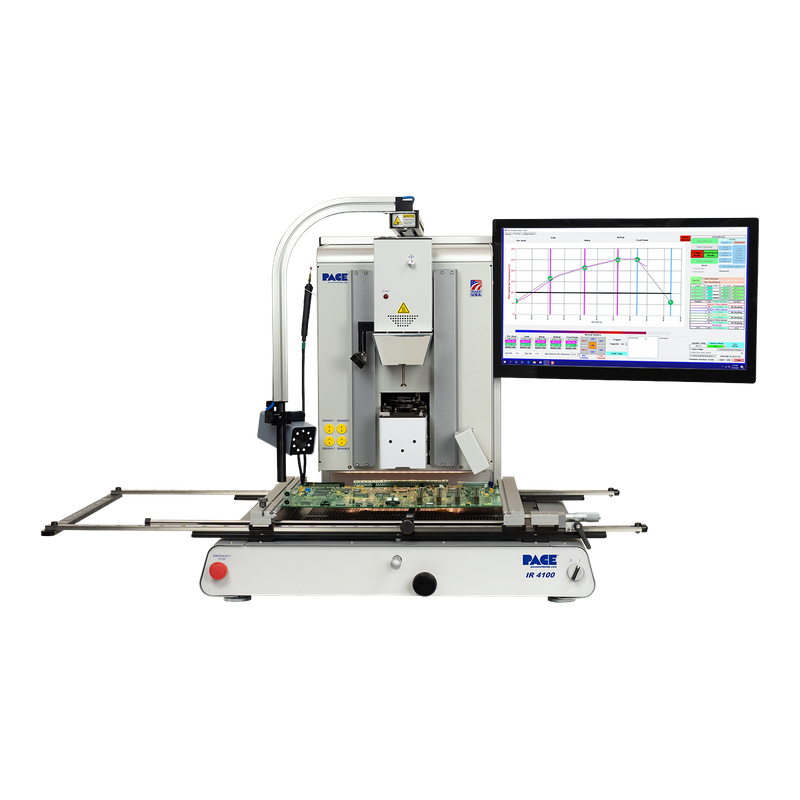
The IR4100 manufacturer page identifies independently controlled peripheral bottom heaters around a central emitter. Ask the supplier to show which zones are fitted and how they respond. Place representative supports where they will be used for production and check the temperature across the assembly. Broad heater coverage can assist a large thermal load, but the sensitive areas of the board still need their own measured limits.
Keep the computer and accessories in the offer
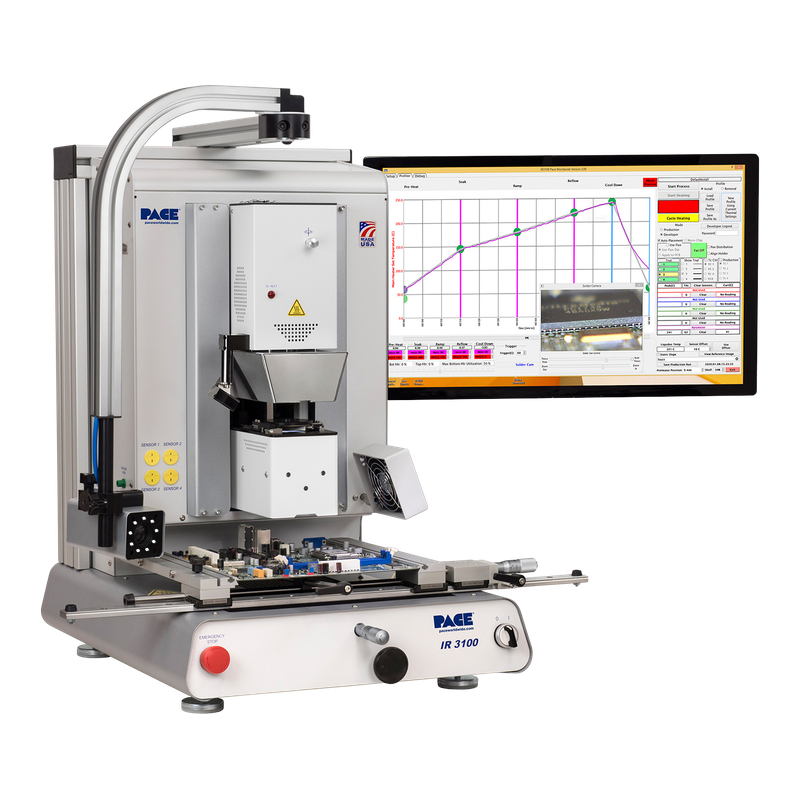
Confirm the software version, compatible computer, connection cables, camera, pickup tools, supports and any licence conditions. A supplied photograph may include a monitor or accessory that is excluded from the price. Ask for a packing list with each functional item identified. For a used station, request fault history and proof that the software communicates with the hardware through a complete profile cycle.
Plan the first repair after delivery
Before processing valuable boards, inspect the received station against the packing list and perform the manufacturer's setup checks. Verify utilities, extraction, emergency isolation and the location of hot surfaces. Run a controlled trial to confirm that the saved recipe produces the expected response in the new environment. Retain the profile, inspection result and accessory setup as a local process record.