
Buyer decision 1
Define what arrives at the loader
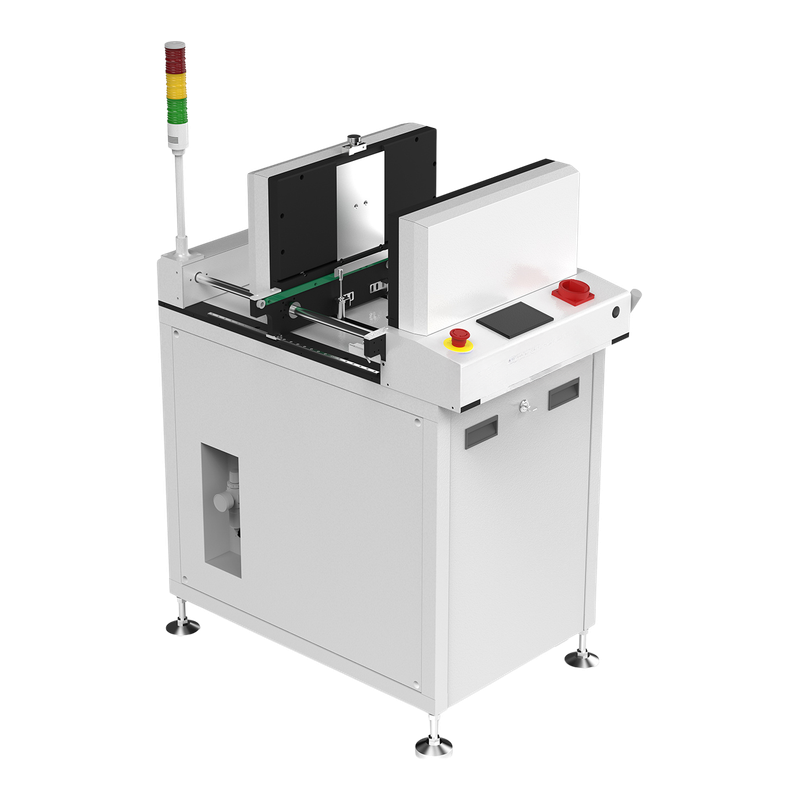
Record whether the incoming material is a loose stack of bare boards or boards held in magazine slots. Include board finish, thickness, weight, warpage, edge features and any components already fitted. A magazine pusher advances a board from its slot. A bottom-separating destacker releases the lowest board from a stack. A vacuum loader lifts from the top through suitable contact areas. These distinctions determine the trial. Do not select a mechanism because its cabinet resembles another model or because all three appear under a loader category.
Buyer decision 2
Qualify the board contact and separation method
For a destacker, inspect the cam contact and underside support with representative thin, thick and warped samples. Check double feeding and edge scuffing as the stack becomes low. For a vacuum mechanism, agree allowed contact areas and test the actual board surface rather than a smooth substitute. Component population and openings can invalidate a seemingly adequate pick arrangement. The Vanstron DL source describes bottom separation for bare boards; its conflicting generic and model-specific thickness fields require the exact offered specification instead of taking the larger value.
Buyer decision 3
Match the magazine, not just maximum board width
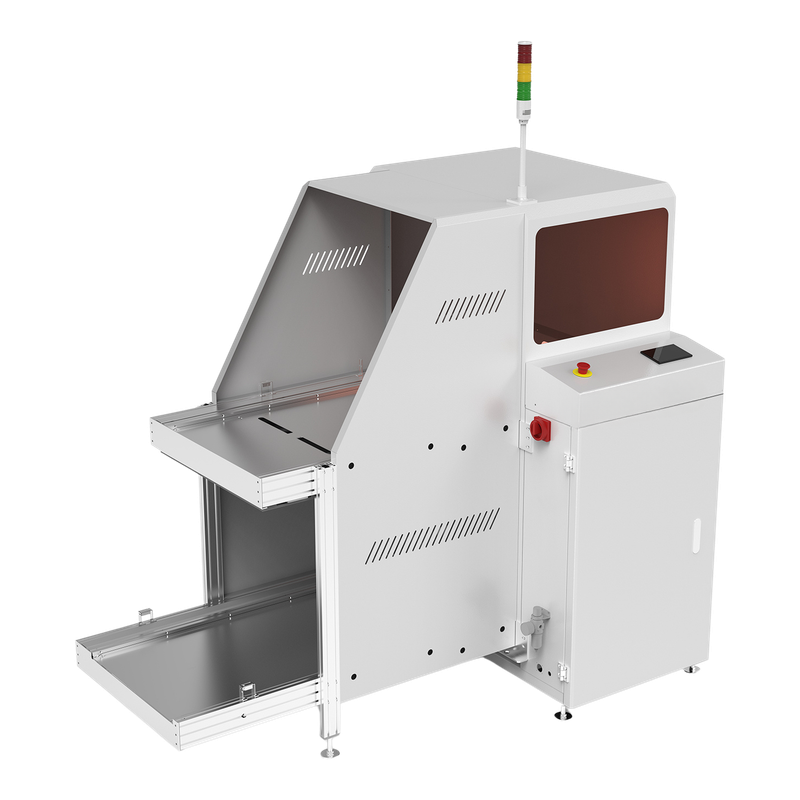
A magazine loader also depends on groove shape, internal width, slot spacing, locating surfaces and pusher alignment. Measure populated-board clearance above and below every occupied slot. A nominal pitch setting is not proof that the board can enter without contacting the next assembly. Photograph the board edge intended for pushing and check connectors or cutouts near it. Record the magazine manufacturer and dimensions in the RFQ. Trial a refitted magazine to show repeatable positioning; a single carefully adjusted magazine can hide inconsistent locating hardware.
Buyer decision 4
Compare one magazine with several staged magazines
Single-magazine handling requires a defined operator exchange plan. Multiple magazine positions can extend unattended staging, but their useful capacity still depends on occupied slots, board clearance and the exchange sequence. Request a complete depletion and changeover demonstration. Observe how the machine detects the final slot, an empty slot and a magazine incorrectly located in its station. Separate reference exchange time from the time required for the real line to resume. Do not multiply nominal positions by slots and call the result guaranteed continuous output.
Buyer decision 5
Use input extremes and preserve the evidence
Prepare a controlled board and magazine list with revisions, dimensions and expected loading patterns. Include first and last slots, the shortest board, the widest board and the most difficult allowed contact condition. Run an ordinary sequence followed by a downstream pause and recovery. Retain close photographs of board edges and surfaces before and after, alongside a short identified transfer recording. Request controller settings, installed sensors and the pusher or separation hardware condition. Avoid demonstrations performed only with unpopulated easy boards when the buyer intends a populated assembly.
Buyer decision 6
Keep loader and stacker functions separate
An output stacker collects boards after a process; an input destacker separates them for the next process. Similar housings and a related family name do not make their core duty interchangeable. A successful loading trial applies to the tested board, storage format and installed contact method. It does not verify later board finishes, larger population heights or a different magazine. For used equipment, the model reference image remains separate from the offered-unit condition evidence. Ask for the exact nameplate, option list and witnessed input-format trial before selecting the machine.
Technical Sources
Published context and applicability
Source-backed model examples support this buyer framework. No LCSMT field test, offered-unit result or stock is asserted.
www.vanstron.com · technical context