
Transport choices
Write down where each board must wait
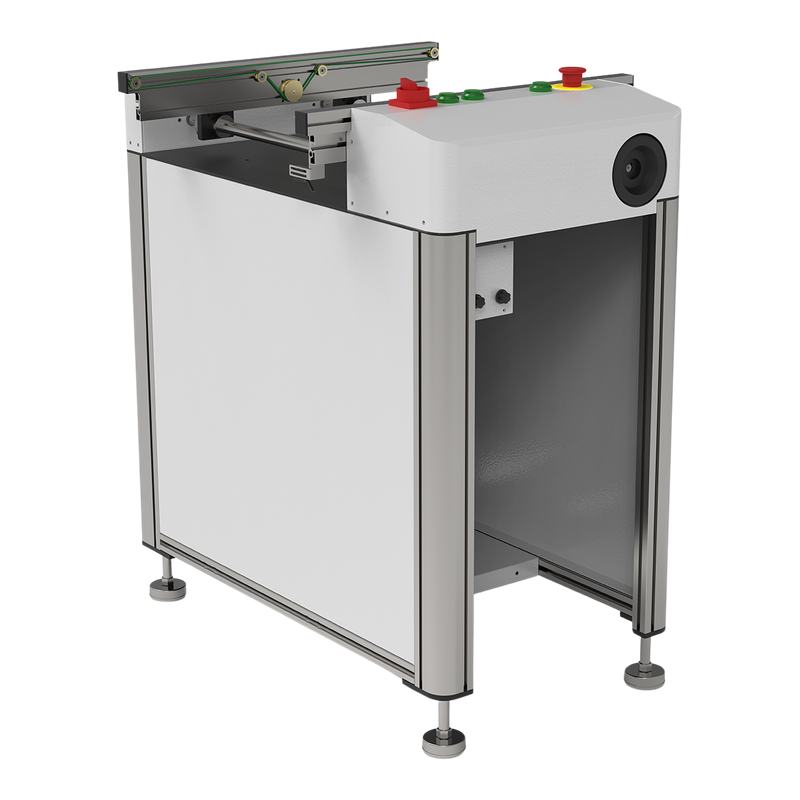
Describe whether the conveyor only bridges a gap, creates a manual inspection stop or holds boards while a downstream process is busy. Mark the intended waiting positions on a line sketch. Separate physical length from the number of independently controlled zones. A long single transport section may have different behavior from several shorter controlled sections even when both occupy the same overall floor space.
Transport choices
Request the installed sensor and drive layout
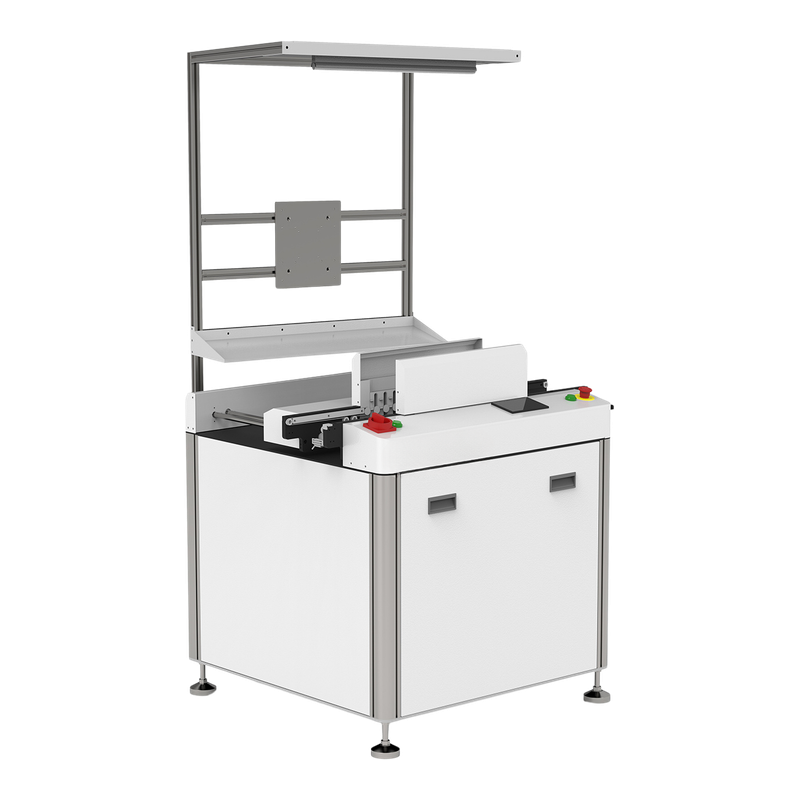
Ask for a drawing identifying board sensors, belt drives and the stop logic for each position. Do not infer independent accumulation from several visible belt pieces. Likewise, an inspection interval described as optional in a catalogue is not proof of installed stop software. The linking and reject-conveyor references illustrate different duties; a reject mechanism should not be counted as an ordinary extra waiting zone.
Transport choices
Observe closely spaced arrivals and backpressure
Prepare identified boards at the shortest normal arrival interval. Make the receiving machine temporarily unavailable under the approved commissioning sequence. Observe the number of boards retained and their separation. Check whether upstream transfer permission changes before capacity is exhausted. Include a board long enough to overlap sensor positions. A trial performed only with widely separated boards can hide an unsuitable zone arrangement.
Transport choices
Compare the behavior rather than the cabinet
Specify the required waiting positions, stop purpose, board length range and recovery order in the RFQ. Request the included sensors and controller functions by configuration. More zones may add flexibility, but they also add drive and sensor components to maintain. Choose the simplest demonstrated arrangement that meets the actual line sequence. Keep a labelled trial record as the acceptance evidence.
Technical Sources
Reference functions and configuration boundaries
The manufacturer references below support the equipment examples. The purchasing questions are an editorial decision framework, not measured LCSMT results or a machine-specific acceptance limit.