
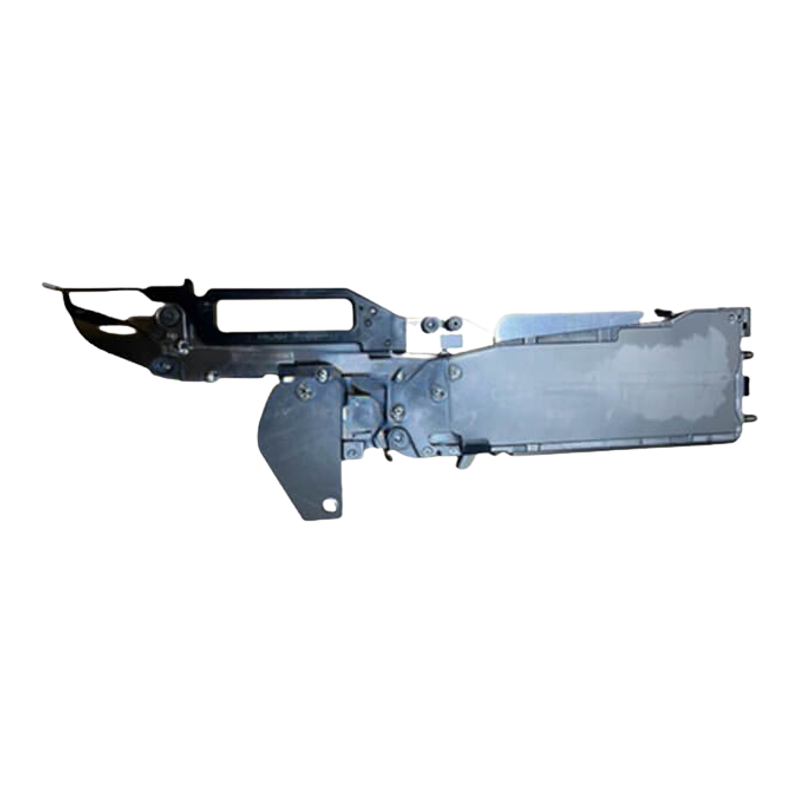
An 8 mm label leaves several purchasing decisions open
Two feeder quotations may both mention 8 mm while describing different interfaces, indexing requirements or included accessories. A short shared width label is useful for catalogue browsing, but it is not an adequate specification for approving a replacement. The buyer needs enough information to compare the requested scope with the scope actually offered.
This guide proposes a comparison sequence for existing feeder requirements. It does not rank brands or declare a universally best feeder. The local W08F and AN05HP pages provide source-listed examples with visible gaps; they are not current-stock promises or proofs of machine compatibility.
Separate identity, application and supply scope
Identity is the complete ordering code and any relevant revision. Application is the documented relationship to the actual machine, tape and production requirement. Supply scope is the complete item and accessories being quoted. Condition evidence concerns the offered unit. A catalogue can help with identity while leaving the other questions unanswered.
Do not infer an upgrade from a change between mechanical and electric feeder descriptions. Ask which actual machine interface and functions are required, and which documents establish the proposed choice. A different operating type is a comparison to investigate, not an automatic substitute for an existing assembly.
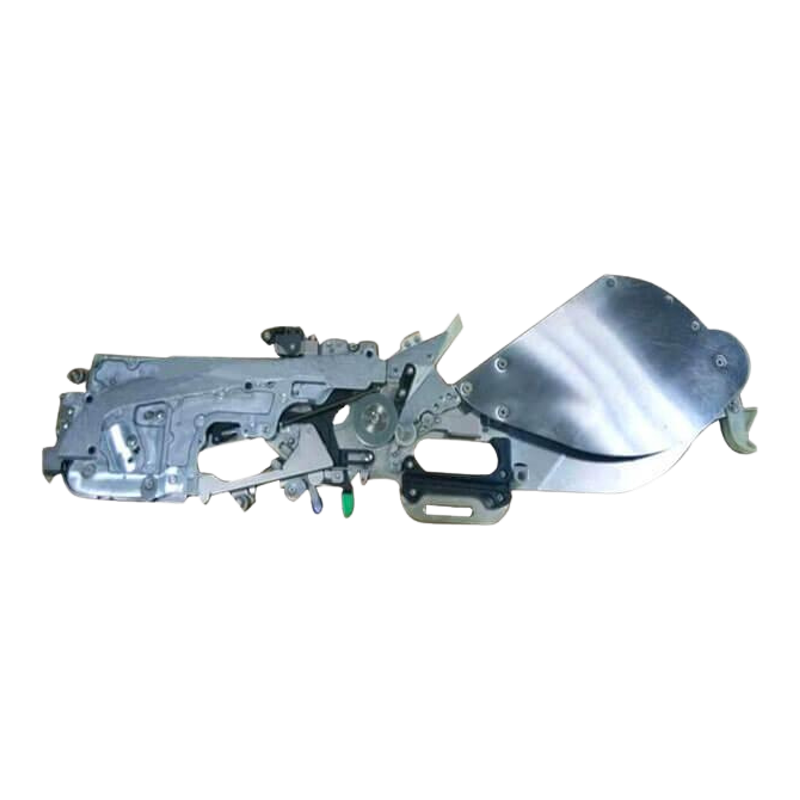
Compare quotations in a fixed decision order
| Decision | Evidence to retain | Consequence if missing |
|---|---|---|
| Exact feeder | Complete code, revision and readable installed/offer labels | Keep the proposed replacement unresolved |
| Required application | Actual tape requirement, machine interface and applicable parts documentation | Do not approve by width or family name alone |
| Included items | Reel holder, accessories and explicit exclusions | Compare the missing-item scope before the prices |
| Offered condition | Declared maker/condition, matched photographs and the agreed test scope | Do not turn a catalogue image into unit acceptance |
Record contradictions as questions with owners. For example, ask who will resolve a code suffix, who supplies the applicable machine document and who approves the acceptance test. An attractive table cannot resolve a disagreement between the label, written description and offered photograph.
Use real catalogue differences to make the RFQ precise
The retained FUJI catalogue distinguishes W08F / 2UDLFA001000 with a 7-inch reel holder from 2UDLFA001200 without that holder. In the local W08F comparison, those are separate supply scopes. If a buyer already has a holder, its reuse still needs the appropriate assembly evidence; the missing holder is not automatically irrelevant.
The AN05HP / E1005706AB0 draft preserves the supplier's ATF/AF naming difference instead of inventing a clean OEM equivalence. A quotation should retain the exact code and ask for the basis of any proposed cross-reference. Similar-looking assemblies or shared width labels are insufficient.
A useful RFQ can therefore state the installed code and revision, machine identity, tape requirement, required accessories and quantity. Attach readable identification and interface views. Ask the seller to state the supplied code, maker, condition, included items and the evidence available for the agreed acceptance scope. That is a request structure, not a promise that every seller can provide it.
Choose the evidence scope before comparing the lowest price
A complete assembly and a component-only or accessory-free offer are not yet comparable purchases. First make their scope explicit. Likewise, a photographed sample and a demonstrated offered unit represent different evidence. Ask what was actually tested, under which documented setup and against which acceptance requirement; do not assume that a moving mechanism proves suitability for the intended job.
Do not copy the supplier's general warranty or machine-sales terms into an LCSMT feeder promise. Do not treat a second crop of one photo as an additional angle. Request the views needed to resolve the actual question, such as a label, interface or included accessory, and retain the original files with their source identities.
Keep the purchase connected to maintenance and acceptance
For a fault-driven purchase, preserve why the installed feeder was removed. The maintenance handoff guide keeps that history separate from the supplier's replacement claim. JUKI's preventive-maintenance material supports recording maintenance work and inspection history, but it does not certify either of the supplier-listed examples or provide their test limits.
The final selection belongs with the actual machine documentation and the responsible engineering/service review. This article supplies no universal feed-accuracy tolerance, cleaning recipe, calibration interval or substitute approval. Keep unresolved application and unit-condition questions visible, and use SMT Classroom for other bounded buying and inspection questions.
Technical sources and catalogue examples
OEM maintenance-history context and supplier identification examples have different scopes; neither establishes an offered unit's condition.
JUKI: preventive maintenance and inspection history
FUJI NXT III 8mm Feeder W08F with 7'' reel holder 2UDLFA001000