
The handover problem is an incomplete identity record
A maintenance request that says “SMT grease” leaves several different questions unanswered. Which formulation is required? Which package is being replaced? Which machine lubrication point is involved? If those answers are combined into one informal name, purchasing may order an apparently similar tube while maintenance assumes an approved repeat supply.
The immediate remedy is a better handover record, rather than a guess about what to apply. Keep the installed machine context and the lubricant designation together. A photograph can help recover a label; it cannot recover an unknown maintenance instruction.
A common prefix is not a common formulation
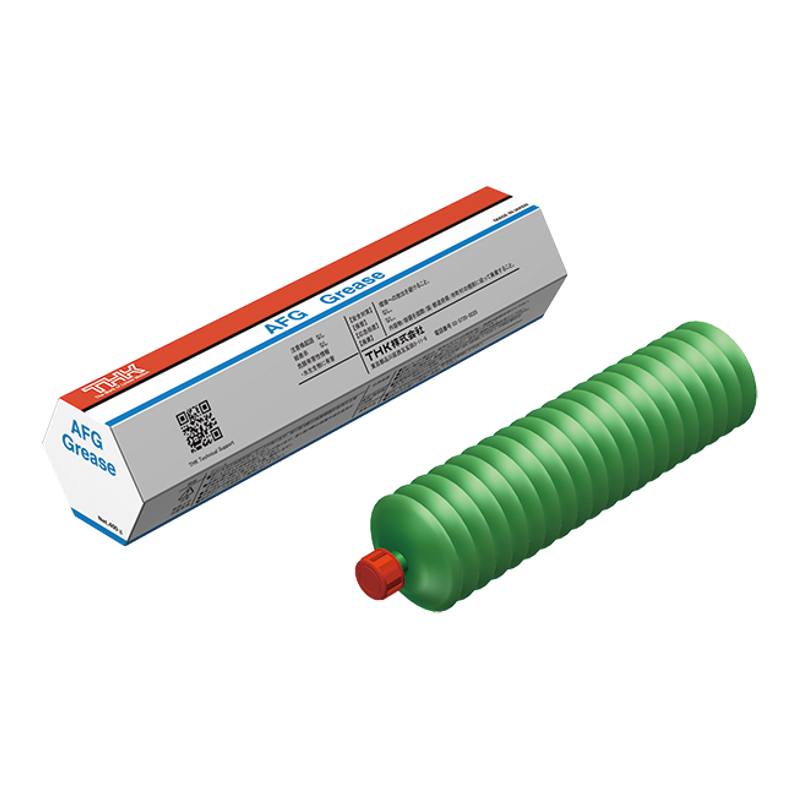
THK lists AFG and AFF separately, with different descriptions and thickener families. That is enough to reject an identification shortcut based only on the letters AF. It does not, by itself, tell an engineer which grease a particular SMT machine requires or approve a change between them.
The THK AFG reference page keeps the AFG illustration separate from the unpictured AFF comparison. Use that distinction to structure the question for the responsible service team: is this a repeat supply of the documented formulation, or a proposed change that needs an application decision?
Prepare a three-part record before opening the replacement
- Application: machine identity, the actual lubrication point and the applicable instruction or service reference. Avoid general labels such as “all JUKI axes”.
- Lubricant: the complete designation already specified or recorded, and how that identity was established. If it is unknown, write unknown.
- Supply: the offered formulation, package, quantity and available label or batch evidence. Keep the official product illustration separate from photographs of an offered package.
These fields make the handover reviewable. They are a proposed documentation workflow, not a chemical-compatibility test or an instruction to open, purge, clean or refill any machine.
Decide whether the request is a repeat order or an unresolved change
For a documented repeat order, ask purchasing to preserve the full designation and agreed package scope in the quotation. The maintenance team can then check the proposed supply against the actual machine requirement. If the offered name differs, return the difference for review rather than silently rewriting the order.
If the existing lubricant identity or the relevant instruction is missing, pause the application decision and obtain the appropriate service input. This page does not supply a mixing rule, cleaning solvent, purge method, amount or interval to fill that gap. Those decisions belong to the applicable machine and lubricant documentation.
Read the package without turning it into a machine approval
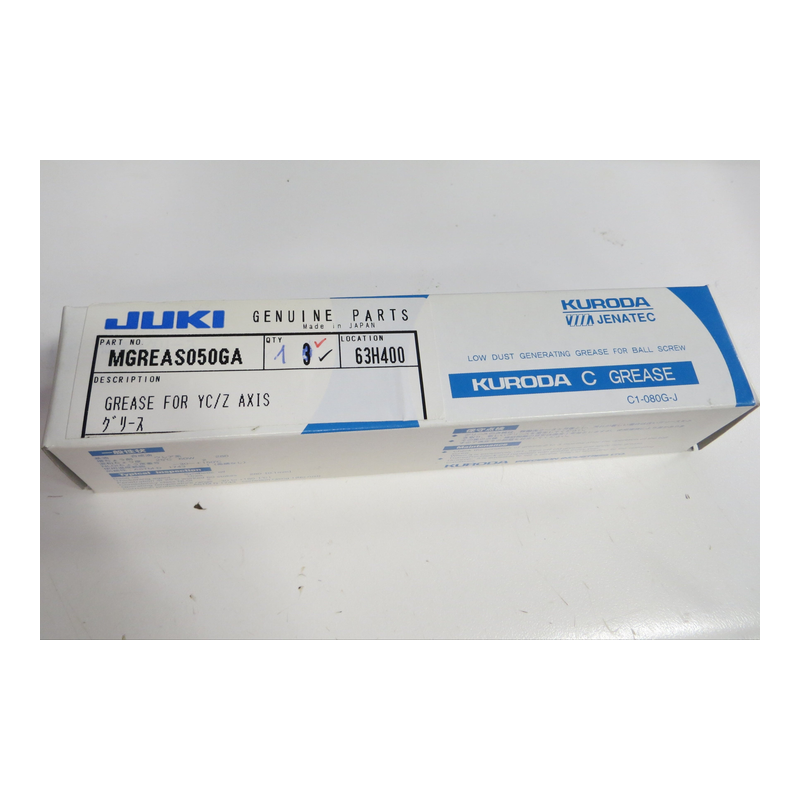
The MGREAS050GA / KURODA C reference has readable package and axis-related wording. That makes it useful for an identification conversation. It does not prove that every machine with a similarly named axis uses that grease, or that a package now offered has the same contents or condition.
Keep a reference photograph, an offered-item label and an actual service record as different evidence. A copied historical label cannot establish unopened contents, current inventory, storage history or a remaining-life claim.
Avoid these shortcuts, then close the handover
- Do not choose a formulation because the cartridge colour resembles an old photograph.
- Do not treat one package image as evidence for every product in a grease family.
- Do not convert supplier availability or authenticity wording into an LCSMT claim.
- Do not interpret an axis name as a universal lubricant specification.
A useful closeout names the person who resolved the application, the exact formulation and supplied package, the documents used and any remaining unknowns. This is relevant to maintenance and procurement handovers; it is not a substitute for the machine's own service procedure.
Technical sources and catalogue examples
THK supports the distinction between named formulations. Supplier material and retained photographs support identification examples. The handover workflow below is editorial decision support, not a machine-specific maintenance instruction.