
Bare-board loading
Describe the actual incoming stack
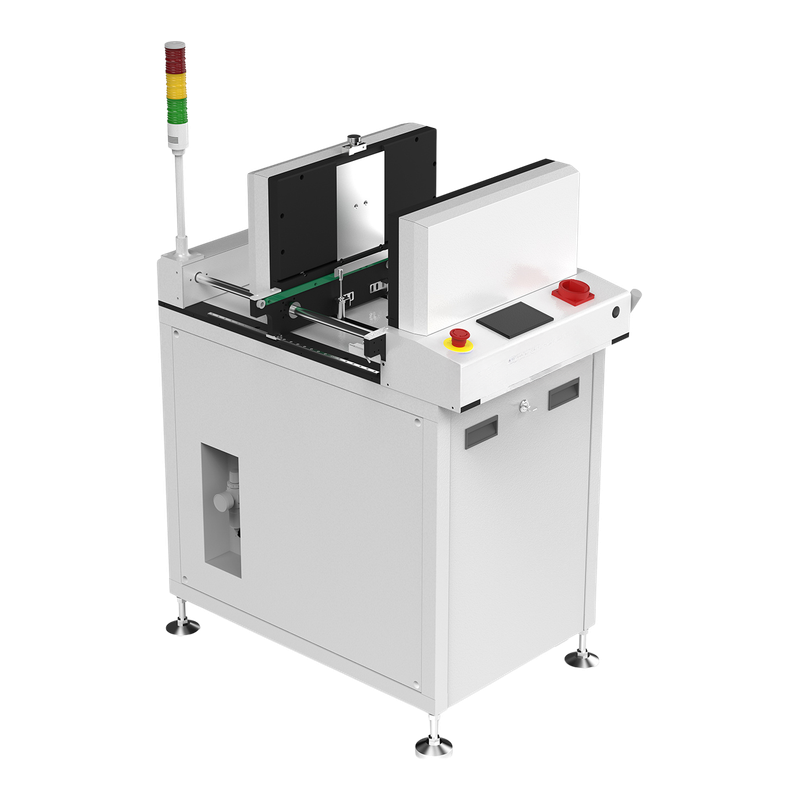
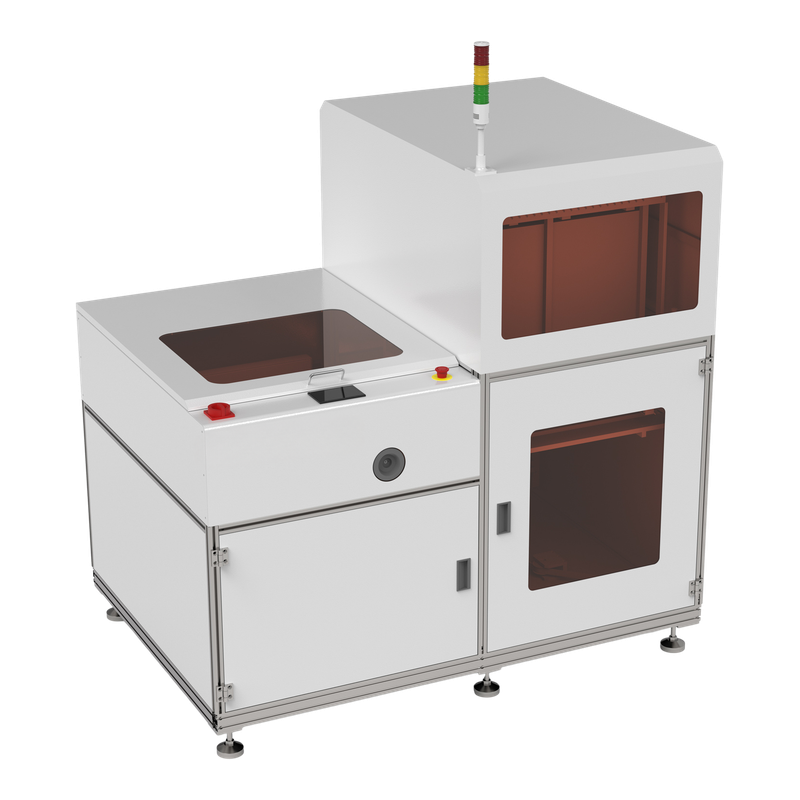
Supply board finish, thickness, outline, allowed warpage and the normal stack condition. Identify which side faces upward and the surfaces a handling tool may contact. The vacuum-loader source describes top pickup, while the DL reference describes bottom separation. Similar feeder duties do not make the two mechanisms interchangeable. The DL illustration here is explicitly comparison context, not an image of the vacuum-loader chassis.
Bare-board loading
Ask for the proposed contact layout
Request a drawing showing the vacuum contacts relative to holes, slots and sensitive surfaces. Obtain the manufacturer-supported limitations for the proposed arrangement. Do not infer a reliable pick from an empty cabinet or a generic vacuum-pressure value. Ask which consumables and contact parts are included. A supplier must resolve the application with the actual board, rather than substitute an easier unperforated sample.
Bare-board loading
Trial the stack extremes and low-material state
Use the normal high and low stack conditions and boards at the permitted extremes. Observe single-board separation and the handoff to the downstream segment. Check what the controller records after a missed or double feed, using the supported procedure. Preserve the board identifiers and settings in the evidence. A few successful picks from a neatly arranged stack do not establish reliable depletion behavior.
Bare-board loading
Resolve inconsistent reference data before purchase
The archived vacuum-loader page includes magazine-related fields that do not clearly match its top-pick description. Treat those fields as unresolved, not as verified capabilities. Request the correct model sheet, contact layout and machine identity from the supplier. Keep the functional explanation separate from an unsupported model-code assignment. A witnessed trial and corrected specification should define the offered configuration.
Technical Sources
Reference functions and configuration boundaries
The manufacturer references below support the equipment examples. The purchasing questions are an editorial decision framework, not measured LCSMT results or a machine-specific acceptance limit.