
Home / JUKI Equipment / JUKI JM-20
Model guide · unit evidence required
OverviewJUKI JM-20 Insertion System
JUKI JM-20 automates insertion and surface placement of larger or heavier components. The L and XL board arrangements and 28/55 mm height configurations belong in one model guide, not separate near-identical pages. Choose JM-20 for the heavier-board and taller-component task supported by its configured transport and tooling. Do not substitute the JM-100 30 mm specification, assume clinching equipment, or promise the optimum rate for an actual bill of materials.
Manufacturer-published model data
JUKI JM-20 Technical Specifications
| Current global l board handling | 410 × 360 mm single clamp; 800 × 360 mm double clamp |
|---|---|
| Current global xl board handling | 410 × 560 mm single clamp; 800 × 560 mm double clamp |
| Pcb mass / height configurations | Up to 4 kg; 28 mm and 55 mm component-height configurations |
| Laser-recognition component range | 0603 metric to 50 mm square under manufacturer conditions |
| Optional vision recognition | 54 mm view: 3–50 mm square; 27 mm view: 1005 metric to 24 mm square |
| Insertion reference | 0.8 second per part under JUKI conditions for 28 mm height; excludes transfer and mark recognition |
| Smt optimum references | 15,500 CPH chip / 4,200 CPH IC; conditional, not complete-board production rate |
| Smt accuracy reference | Laser ±0.05 mm at 3 sigma; optional vision ±0.04 mm |
Manufacturer model data · Important: model-level figures and features are conditional manufacturer information, not guarantees for a particular used JUKI JM-20 unit.
Key Features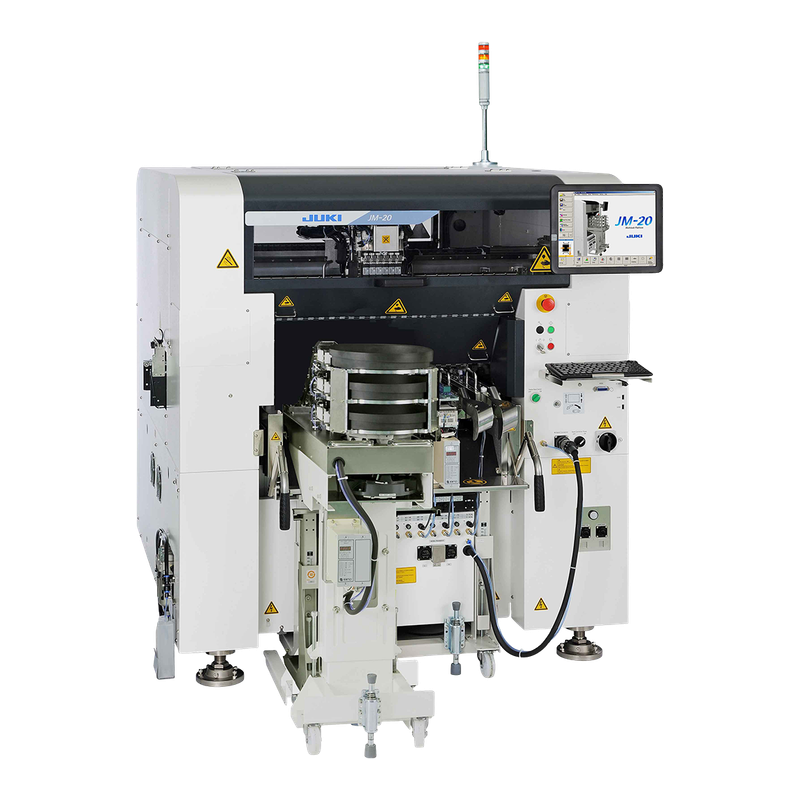
Configuration Must Be Verified
The offer must identify JM-20 serial, L/XL board configuration, 28/55 mm arrangement, recognition hardware, feeders, nozzle tooling and licensed controls; Lead drawings, hole tolerances, board supports, insertion-force evidence, rejects, populated-board transfer and recoverable programs.
Buyer decision guide
When JUKI JM-20 Makes Sense — and When It May Not
JUKI JM-20 selection should begin with production requirements and evidence, not with a model name alone.
Application qualification
JUKI JM-20 Acceptance Plan
Qualify the leads and supported assembly
For a JM-20 enquiry, include the component body, lead pitch, allowable lead deformation, PCB hole dimensions and underside projections. Identify parts that need a chuck or special feeder instead of assuming vacuum pickup is suitable for every component. Ask for the offered nozzle and recognition setup to be demonstrated on the difficult leads. Retain rejected-part handling and insertion-force evidence with the test. A component can fit the catalogue outline yet still require custom tooling or a board support that is absent from the offer.
Distinguish board size and height configurations
The current global JM-20 table distinguishes L and XL transport and single- versus double-clamp envelopes, while the China page uses different board labels and leaves double-clamp handling unspecified. Retain the global figures as a reference and resolve the serial-specific manual before selection. Also distinguish 28 mm and 55 mm configurations: the published insertion and placement rates exclude board transport and mark recognition and carry a 28 mm condition. Time the complete intended assembly; do not apply the optimum rate automatically to tall or mixed components.
Verify changeover, feeder supply and recovery
Request the exact feeder list and demonstrate tape, radial, axial, tray or bulk supply only where that equipment is included. Retain the lead-bending or correction setup separately from a general insertion demonstration. Have the operator reproduce a changeover, component recognition, reject recovery and program restoration using authorized files. JUKI China and the independent Shenzhen Binjiang model catalogue provide China enquiry routes, not a confirmed machine offer. Neither was contacted; configuration, availability, condition, software rights and support require dated supplier evidence.
Typical Applications
Typical Applications for JUKI JM-20
JUKI JM-20 should be evaluated against the buyer’s feed and recognize the component body and leads, align the supported board and insert or place the part. actual feeder, nozzle, lead correction and optional vision equipment must suit the component drawing and insertion task. The final application fit depends on the evidence for the specific unit.
Before quotation
Three JUKI JM-20 Buyer Questions
These questions keep the quotation scope connected to the buyer’s real SMT process.
1
Which current global l board handling requirement must the proposed JUKI JM-20 demonstrate?
JUKI JM-20 buyers should confirm this with actual-machine evidence before quotation.
2
What is included in this JUKI JM-20 offer: jm-20 serial, l/xl board configuration, 28/55 mm arrangement, recognition hardware, feeders, nozzle tooling and licensed controls?
JUKI JM-20 buyers should confirm this with actual-machine evidence before quotation.
3
Can the JUKI JM-20 acceptance run document lead drawings, hole tolerances, board supports, insertion-force evidence, rejects, populated-board transfer and recoverable programs?
JUKI JM-20 buyers should confirm this with actual-machine evidence before quotation.
Running video confirmation
JUKI JM-20 Running Video Review
Before shipment, review the relevant power-on, movement, operating state and visible condition for the specific offered unit.
Request a dated operating sequence of the offered JUKI JM-20. The model-image control requests evidence, not playback of a recorded video.
- Power-on and visible operating-state confirmation
- Feed and recognize the component body and leads, align the supported board and insert or place the part. Actual feeder, nozzle, lead correction and optional vision equipment must suit the component drawing and insertion task.
- Unit-specific condition evidence before export packing
Used-machine inspection
Inspection and Export Preparation for an Actual JUKI JM-20
- Nameplate and configurationModel, serial, year, voltage and installed options.
- Machine configurationMechanical, transport, sensing, camera, software and motion condition relevant to the quoted JUKI JM-20.
- Transport and softwareConveyor, sensors, program and line-interface evidence where applicable.
- Running and packing proofPower-on evidence, visible operation and export packing records.
Spare Parts
JUKI JM-20 Spare Parts Scope
Request a unit-specific JUKI JM-20 list for component-correct grippers and vacuum nozzles, feeder tooling, filters, board supports, lead-correction fixtures and authorized program backups. Availability is not claimed on this review page.
Quotation checklist
Provide target assembly, process requirements, current global l board handling, installed configuration and destination, required accessories and desired inspection evidence for the proposed JUKI JM-20.
FAQ
Common questions for overseas buyers evaluating a JUKI JM-20.
01Application
Which production task suits JUKI JM-20?
Feed and recognize the component body and leads, align the supported board and insert or place the part. Actual feeder, nozzle, lead correction and optional vision equipment must suit the component drawing and insertion task. Choose JM-20 for the heavier-board and taller-component task supported by its configured transport and tooling. Do not substitute the JM-100 30 mm specification, assume clinching equipment, or promise the optimum rate for an actual bill of materials.
02Configuration
What should a buyer confirm for JUKI JM-20?
JM-20 serial, L/XL board configuration, 28/55 mm arrangement, recognition hardware, feeders, nozzle tooling and licensed controls. Request the exact nameplate and option list.
03Unit evidence
Does this JUKI JM-20 illustration prove stock?
The JUKI JM-20 illustration is model-reference imagery, not a dated stock photograph. Serial, location, condition, price and running evidence require separate confirmation.
Export packing proof
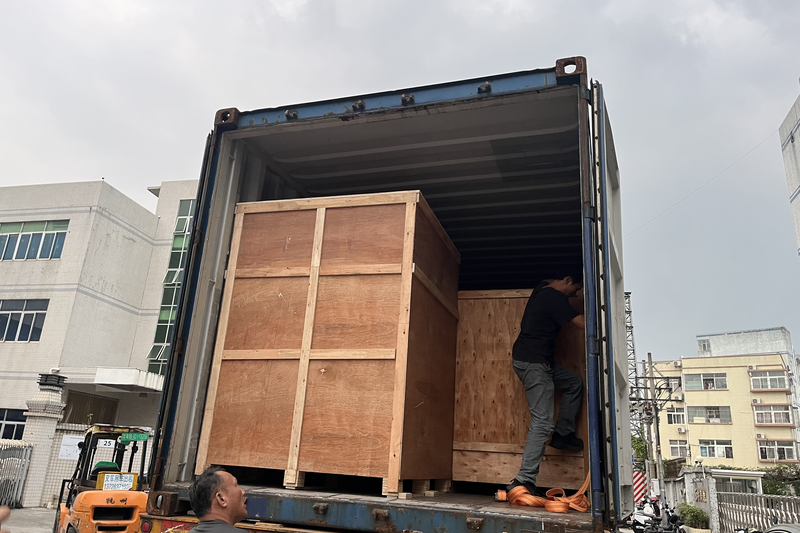
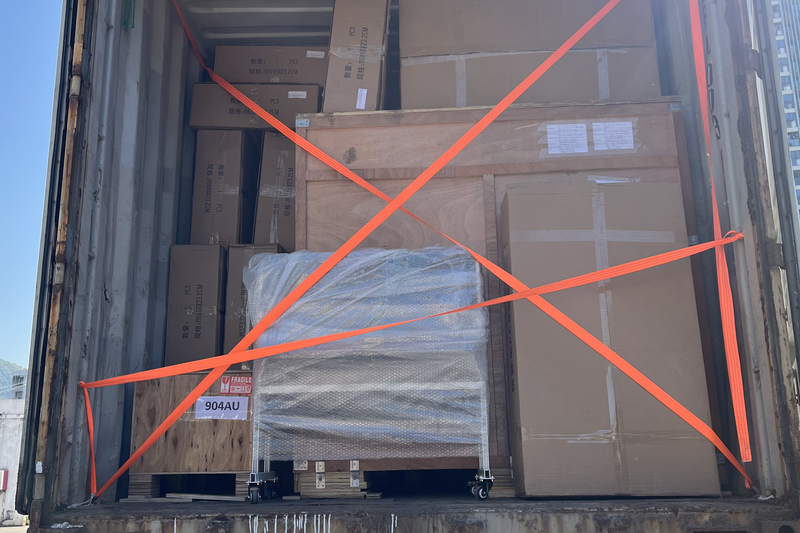
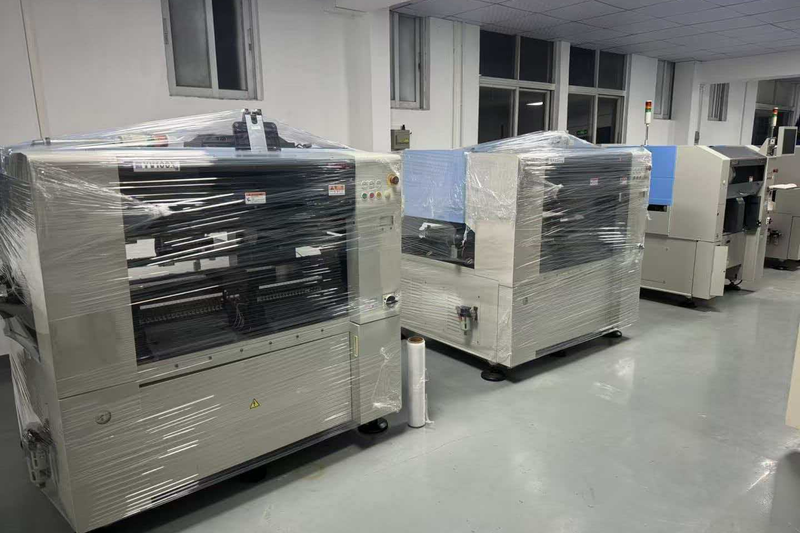
Export Packing and Container Loading
The V3 scrolling proof gallery is retained. It describes LCSMT export preparation, not the condition of a particular JUKI JM-20 unit.
Send Your JUKI JM-20 Production Requirement
Share target assembly, process requirements, current global l board handling, installed configuration and destination and inspection expectations. LCSMT can review whether an actual JUKI JM-20 configuration is a practical match.