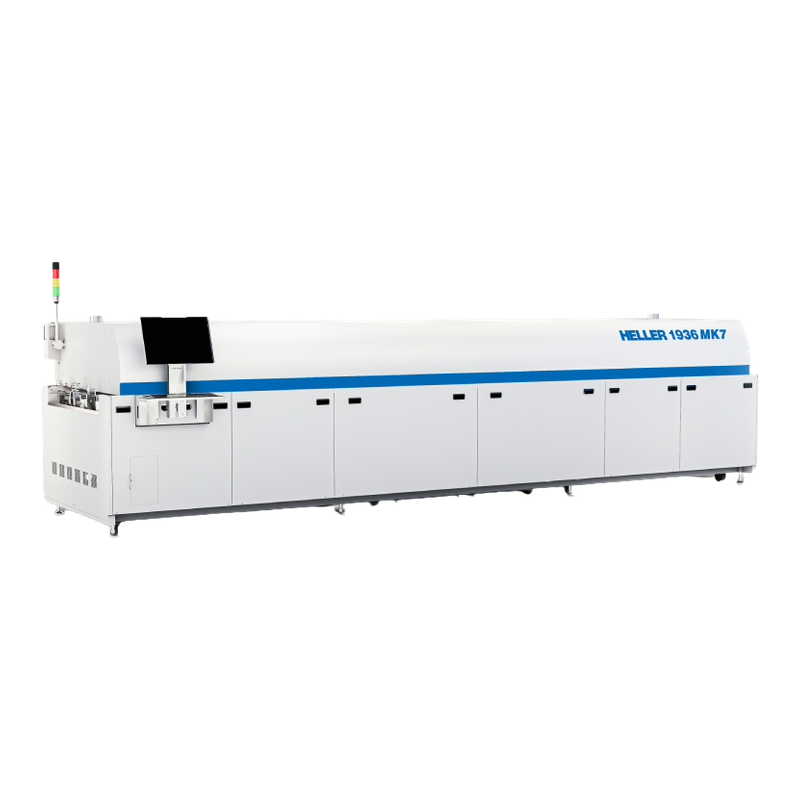
Buyer decision 1
Begin with the assembly, not the atmosphere label
The useful buying question is whether a proposed oven and atmosphere can meet the requirements of your actual assembly. Nitrogen is not a substitute for selecting a suitable solder paste, defining a thermal profile or verifying board support. Start with the paste supplier’s instructions, component constraints, finish, joint geometry and acceptance method. Separate requirements that are mandatory from preferences. Ask the process owner to explain what problem the atmosphere is intended to address and which measurement will show whether that problem was resolved.
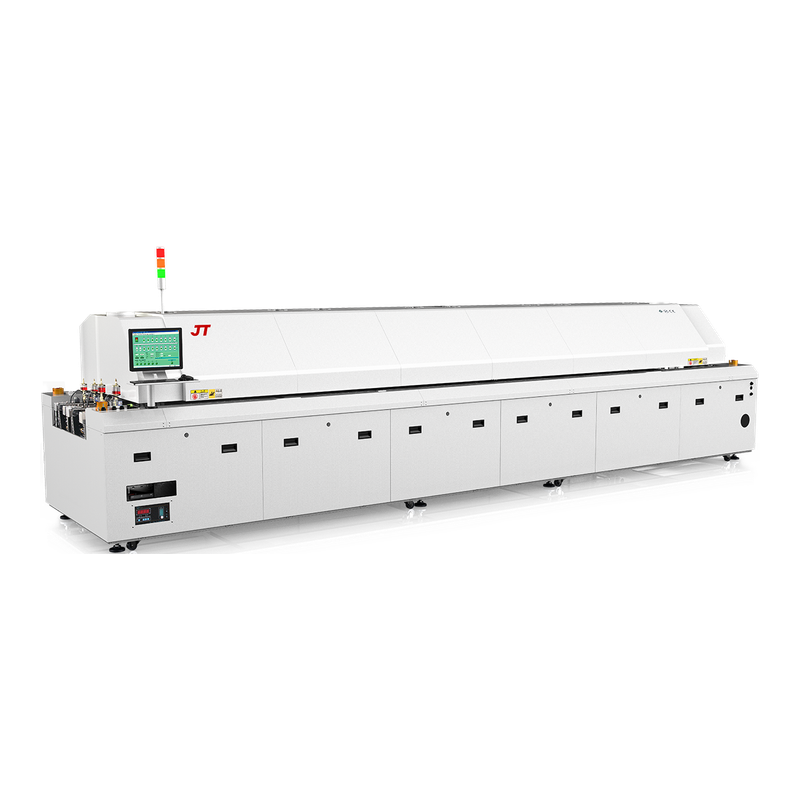
Buyer decision 2
Identify what the proposed machine actually includes
JT describes TEA as an air oven and JTR with a sealed chamber and nitrogen retention. These are model contexts, not proof that every used machine has the same modules. Request the exact nameplate, zone layout, gas plumbing, oxygen measurement hardware and exhaust arrangement. Record items that are absent or require service. Do not transfer nitrogen capability from one family to another because cabinets look similar, and do not accept a controller screen as evidence of a calibrated oxygen measurement system.
Buyer decision 3
Compare profiles on representative populated boards
Choose an assembly that exposes thermal difficulty: large copper regions, sensitive components, tall connectors and mixed thermal mass. Locate measurements with the responsible process engineer and keep the board revision, loading pattern, speed and recipe together. Evaluate against the material and assembly requirements supplied for the trial rather than inventing a universal process limit. If air and nitrogen are being compared, record the conditions of both runs. A difference in recipe, loading or cooling may prevent an atmosphere-only conclusion.
Buyer decision 4
Put oxygen readings in their operating context
A low oxygen value without sensor position, calibration, loading and flow is a weak comparison. Ask where the atmosphere is measured and retain a time trace during a representative loaded run. Record the actual gas flow and the state of exhaust and chamber seals. Manufacturer minimums describe stated conditions; an empty-chamber demonstration does not establish your production atmosphere. Investigate unexpected readings before declaring the oven deficient: sampling arrangement, leaks, calibration and process loading may all need review by qualified personnel.
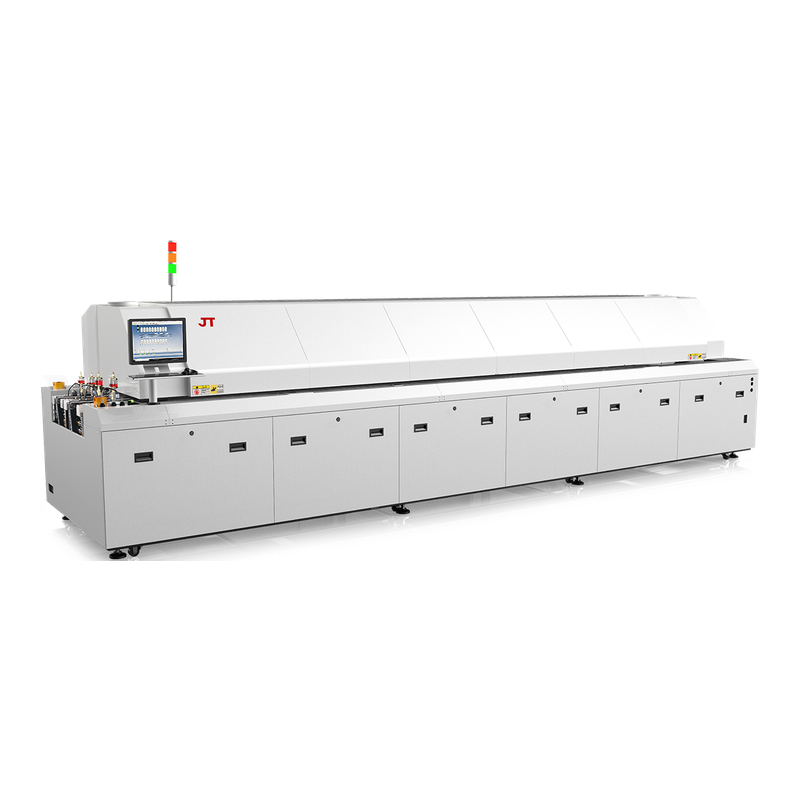
Buyer decision 5
Include the obligations behind the gas system
The purchasing comparison should include the proposed nitrogen supply, installation responsibilities, measurement equipment, maintenance access and service support. Obtain an operating-cost estimate based on the demonstrated conditions, not a promotional consumption figure copied into every quotation. Identify who will calibrate sensors, maintain seals and respond to alarms. A smaller initial oven price may omit work needed for the required atmosphere; a more expensive nitrogen oven may add little value if the assembly has already been qualified in air.
Buyer decision 6
Avoid three common shortcuts
The first shortcut is to choose by a low oxygen headline without a board result. The second is to assume that a lead-free claim establishes compatibility with every assembly. The third is to compare unlike recipes and attribute all changes to atmosphere. Remedy these by agreeing the assembly and acceptance method first, identifying the installed configuration, and retaining complete profile and atmosphere records. An attractive model image can help identify a family; it cannot establish its condition, accessories, calibration or availability.
Buyer decision 7
State exactly what the comparison proves
A useful acceptance pack contains the tested assembly identity, recipe, board-temperature trace, oxygen and flow context where applicable, observed results and unresolved equipment items. Its conclusion applies to that assembly and setup, not all future boards. Reassess after meaningful changes to materials, loading, exhaust, maintenance or cooling. Request a dated unit-specific operating sequence and the agreed evidence before purchase. This guide offers an enquiry framework, not a claim that LCSMT has performed either trial or verified any supplier’s stock.
Technical Sources
Manufacturer context and limits
Checked 5 October 2026. Published model facts support the examples; the acceptance framework is buyer guidance, not claimed LCSMT field-test evidence.