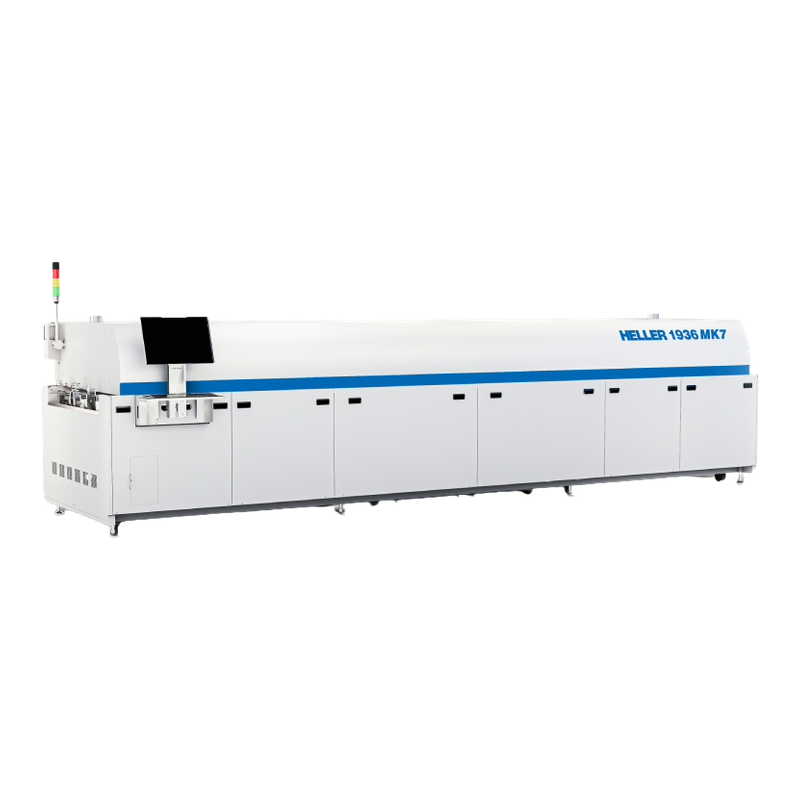
Buyer decision 1
Treat the exit end as part of the process
Reflow buying discussions often focus on heating zones while cooling and residue management receive only a feature label. The useful question is whether the installed system supports the assembly’s required exit behavior and can be maintained without unacceptable disruption. Flux-related deposits, airflow paths and cleaning access belong in that discussion. Do not infer a failure from discoloration alone, or infer good condition from fresh paint. Request safe inspection and measured process evidence rather than a cosmetic judgement.
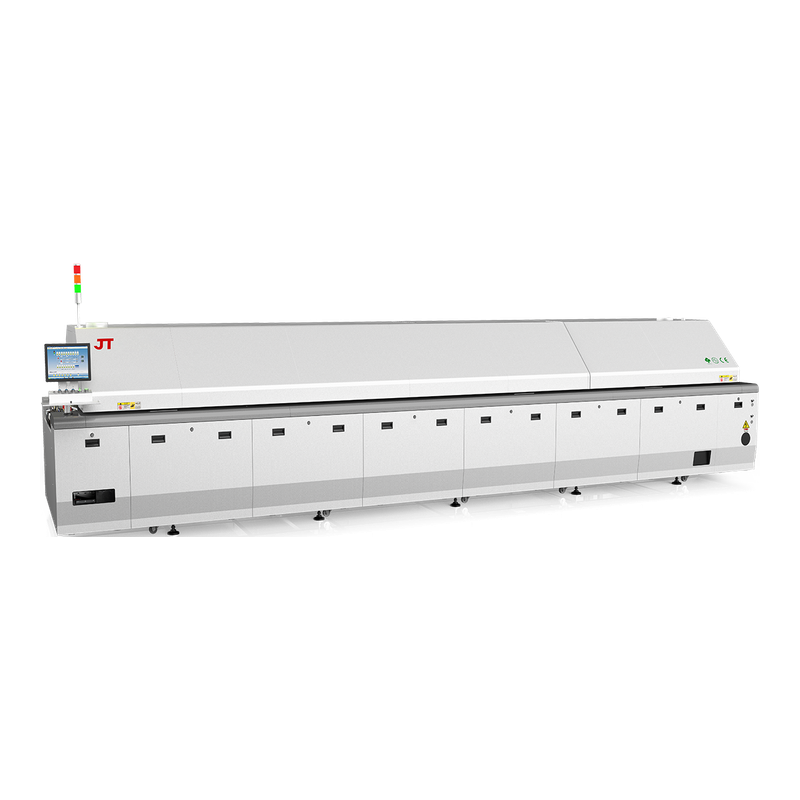
Buyer decision 2
Inventory the modules before comparing claims
JT KT describes optional multizone double-sided cooling and two-stage flux collection. Ersa HOTFLOW THREE describes staged Smart Cleaning. Those architectures are not interchangeable specifications. Ask the seller to identify each installed module, its control, service access and consumables on the offered serial. Photograph the relevant areas while safely isolated. Mark omitted options and replaced components explicitly. A family brochure and a photograph of a different cabinet cannot establish what this quotation includes.
Buyer decision 3
Measure the board rather than only the air
Have the process owner select measurement locations and acceptance criteria for the actual populated assembly. Retain the board-temperature trace, loading pattern, conveyor speed and cooling settings. Compare entry into cooling with exit behavior, including the subsequent transfer requirement. A sensor reading from a duct or chamber is not the board temperature. Do not invent a universal cooling-rate or exit-temperature limit: the materials, components and assembly process govern which limits apply and how they should be verified.
Buyer decision 4
Review deposits, access and the cleaning record
Ask to see collectors, filters, ducts, seals and other identified residue-management components before presentation cleaning, where safe and practical. Request maintenance records, consumable identifiers and access instructions. Distinguish deposits that are expected under the process from conditions the equipment supplier considers unacceptable. Have qualified service personnel assess problems rather than removing guards during operation. If cleaning history is absent, treat the gap as a purchase condition; do not claim either a failure or a completed service from a photograph alone.
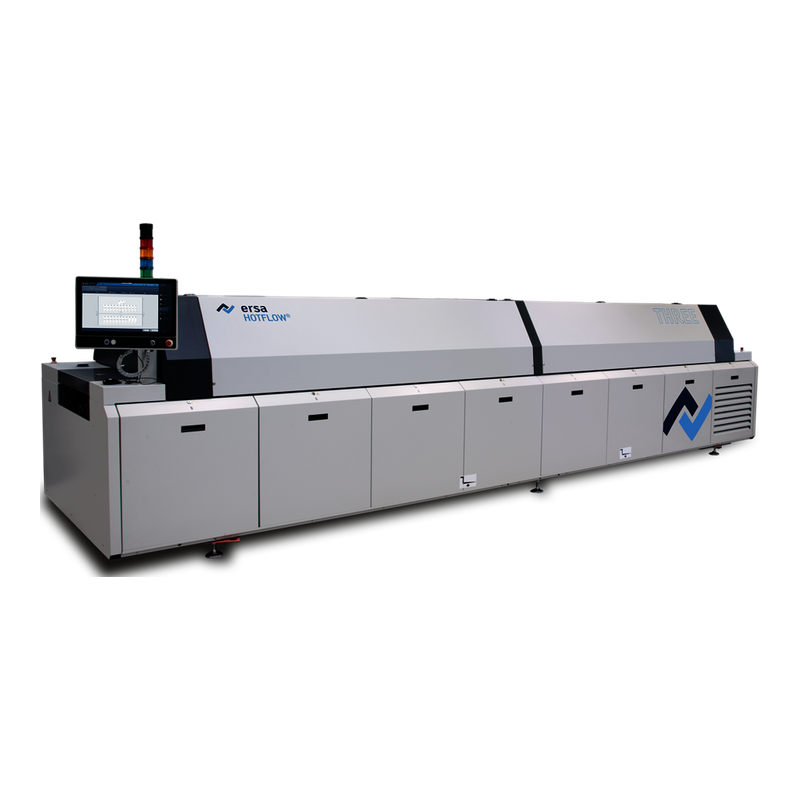
Buyer decision 5
Keep a loaded-run and restart record
Use a representative load and observe the cooling sequence, transfer and agreed restart procedure. Document alarms, operator intervention and settings changed during the trial. A short empty-conveyor run cannot establish loaded cooling behavior or long-term residue management. If a change is made, retain before and after records so its effect is not confused with a different recipe or board. Ask who owns follow-up verification and what maintenance or replacement must occur before the offered machine is accepted.
Buyer decision 6
Turn maintenance claims into scope and evidence
Ask for the tasks, access, consumables, service support and assumptions behind any advertised maintenance interval. Keep an estimate separate from an observed history. Include service space and safely handled waste or residues in the installation plan with the responsible factory personnel. Do not repeat a supplier’s universal no-maintenance promise or a catalogue energy saving as measured performance. A useful offer lists what will be serviced, what remains unresolved and how the agreed board process will be rechecked afterward.
Buyer decision 7
Use the evidence to compare unlike oven families
The final comparison should preserve each oven’s architecture rather than reducing both to one cooling headline. Record fitted modules, safe inspection observations, board traces, maintenance evidence and outstanding actions. These records support a decision about the tested configuration; they do not prove years of future reliability or every assembly’s profile. Common mistakes are to buy zone count alone, ignore optional cooling and mistake cleaning for restored performance. The remedy is configuration identification followed by a representative process trial.
Technical Sources
Manufacturer context and limits
Checked 5 October 2026. Published model facts support the examples; the acceptance framework is buyer guidance, not claimed LCSMT field-test evidence.