Line-rate selection
Two rate figures, two different jobs
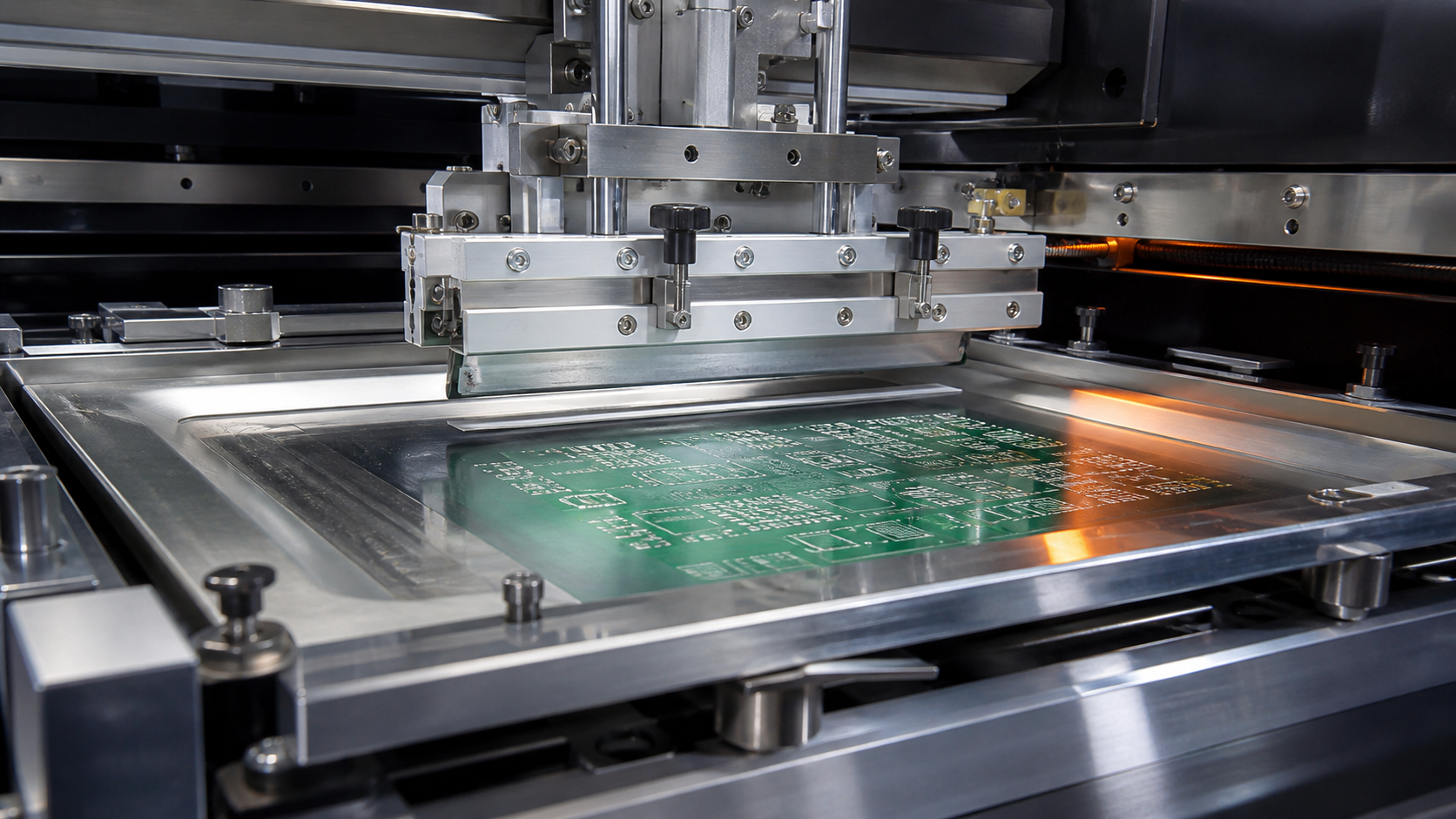
A stencil printer completes a paste-transfer cycle for a board or substrate. A placement machine mounts components. Their catalogue rates use different units and test conditions, so the printer's core cycle and the placer's components per hour cannot be compared as if they measured the same line output. Before choosing a machine, write down the assembly's boards per hour, placements per board, board dimensions and changeover pattern.
Line-rate selection
Read the manufacturer's conditions
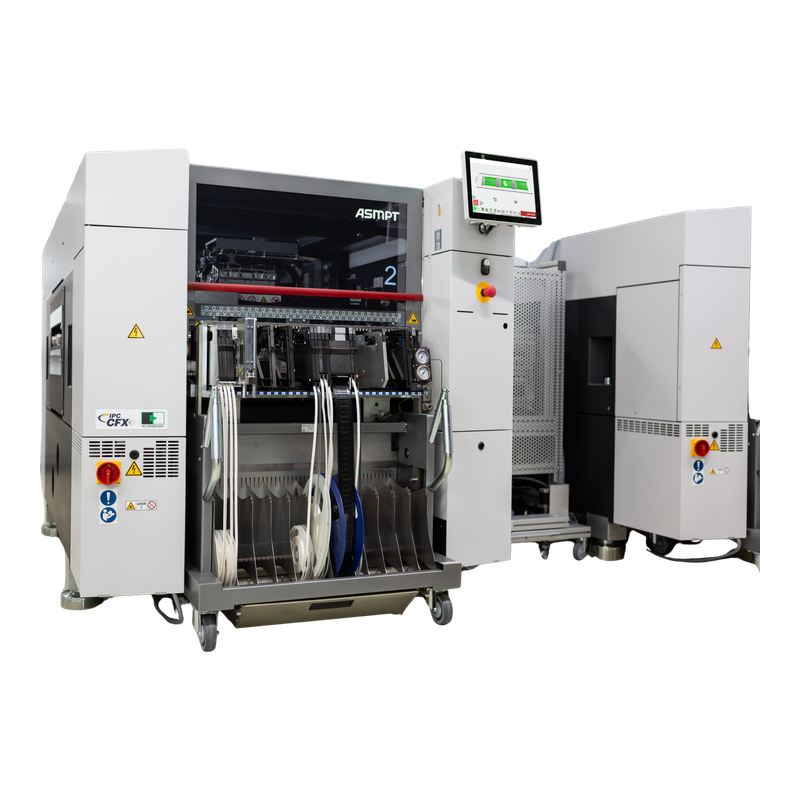
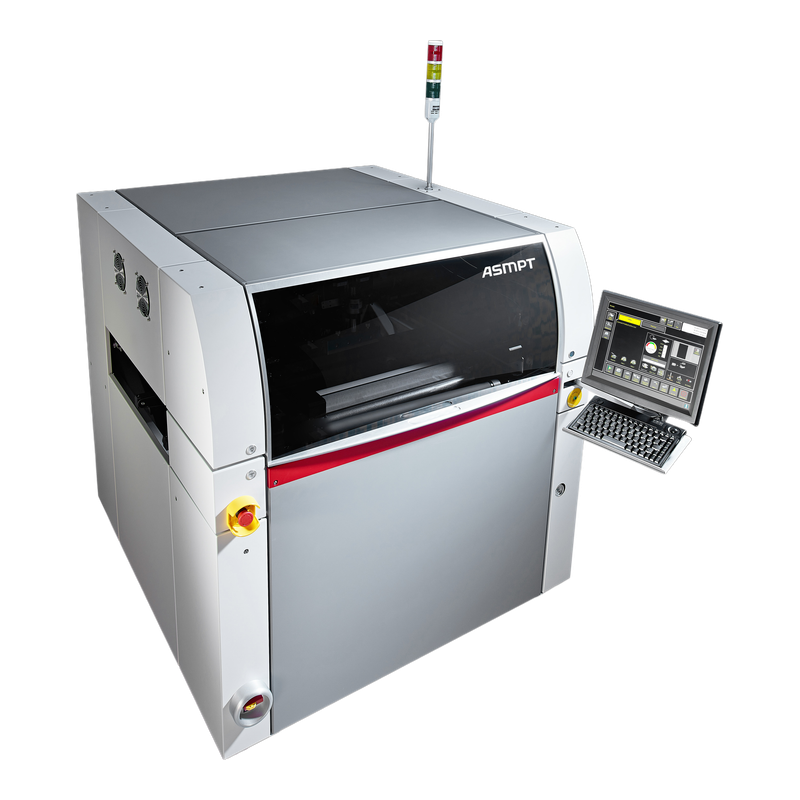
ASMPT lists a 6.5-second core cycle for DEK NeoHorizon 01iX and 8 seconds for 03iX. Its SIPLACE SX table lists 43,250 cph for SX1 and 86,500 cph for SX2. Those are model-level figures. The real line also spends time transporting boards, replenishing components, cleaning stencils, changing jobs and handling inspection decisions. The figures help shortlist equipment; they do not establish the output of an offered unit.
Line-rate selection
Find the station that constrains the product
For a first estimate, divide the required placements per board by the placer's assumed effective placement rate, then compare that time with the printer cycle plus transfer and cleaning time. Keep this as a planning calculation, not a guarantee. If a board carries many components, the placer may dominate. If a short run requires frequent stencil changes or cleaning, printer availability may dominate. Repeat the calculation for the product mix rather than choosing one headline rate.
Line-rate selection
Ask for evidence tied to the actual line
Record the exact printer and placer variants, installed heads or stencil loader, feeders, software, conveyor mode and board envelope. Request a demonstration with representative boards and components. Time a stable sequence across several boards, including transfer and the planned cleaning or replenishment steps. Record stop causes and inspection disposition separately; a single fast demonstration does not prove sustained production.
Line-rate selection
Keep the comparison within its limits
DESEN lists a 460 × 350 mm maximum board for Classic 1009, while ASMPT lists different conveyor ranges and head configurations for its placement platforms. A machine can be fast on paper and still fail the job if the board, stencil, component or installed option does not fit. Published capability is a model reference; unit condition, stock, configuration and acceptance results require separate evidence before quotation.
Technical sources
Manufacturer model tables
ASMPT: DEK NeoHorizon model comparison