
A published insertion speed says little about whether a particular platform can place your heavy connector, unusual lead pattern or supported board. The useful buying question is: what would a supervised trial on your representative board prove, and what evidence should be kept?
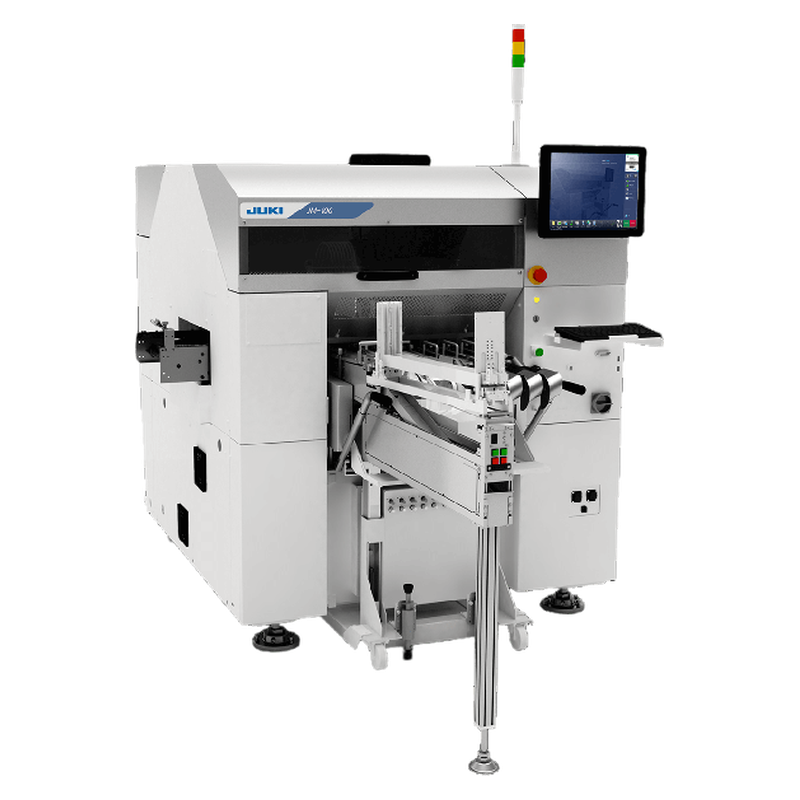
Trial preparation
Choose a sample that exposes the hard cases
Build a short matrix of real assemblies: board revision and dimensions, component supplier and package, body height and weight, lead count/pitch/length, polarity or orientation, bottom-side clearance, board support points and the intended line handoff. Mark the most demanding parts rather than selecting only an easy demonstration.
Supply a controlled drawing or approved CAD data and a defined quantity of good sample parts. Photograph their leads before the trial; bent or inconsistent leads can otherwise obscure whether a failed insertion is a feeding, recognition, tooling or input-quality problem.
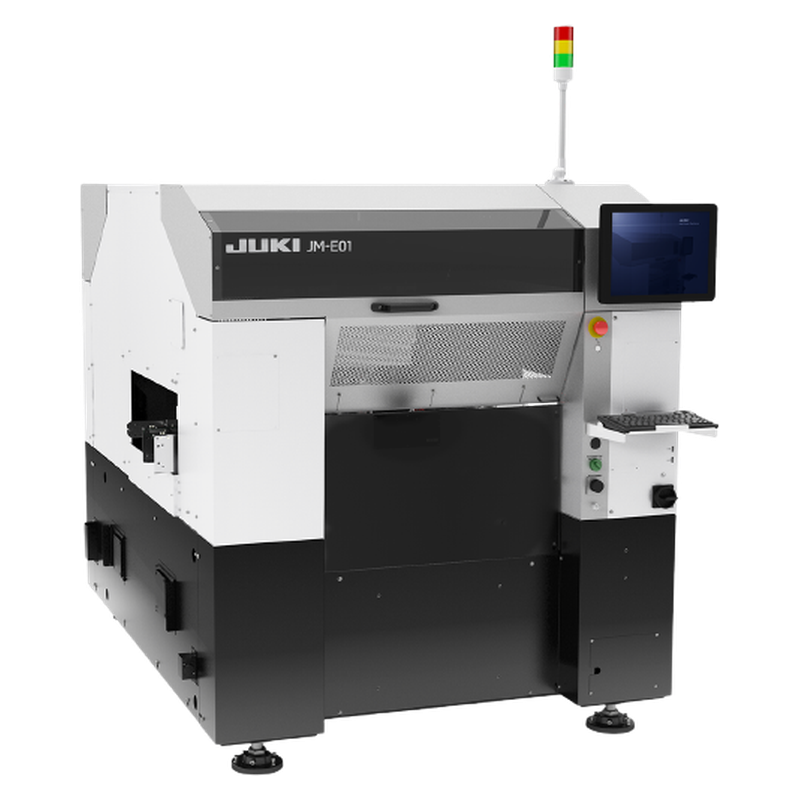
Installed machine boundary
Record what is fitted, not only what the brochure permits
JUKI publishes distinct JM-100 board ranges for standard and clinch arrangements, and identifies vision centering and active clinching as option-dependent capabilities. JM-E01 combines insertion and screw tightening, but its larger published handling range cannot be assumed on a JM-100. Ask for the nameplate, head, nozzles/grippers, feeder types, recognition sensors, clinch unit, screw supply if relevant, software licenses and program revision for the offered unit.
Acceptance sequence
Run a repeatable, witnessed trial
Photograph the nameplate, installed tooling, feeder positions, board support and software option screen before programming.
Teach recognition and pickup with the supplied part lot. Record any rejected part and its reason rather than deleting failed attempts.
Run the agreed sample boards through insertion; inspect alignment, seating, polarity, lead exit and backside condition against buyer-defined criteria.
If clinching or screw fastening is in scope, demonstrate the installed option and preserve the relevant mechanical or torque records.
Repeat after a controlled changeover so the handoff does not depend on one specially tuned sample.
Set numerical acceptance limits from the buyer's drawing, component specification and quality plan. This article does not invent a universal insertion-yield or torque threshold.
Evidence pack
Keep evidence that survives the demonstration
- Board and component revision list, sample quantity, tooling map and machine configuration.
- Short video of feeding, recognition, insertion, board support and exit; include any clinch or screw operation actually fitted.
- Before/after photographs of representative components and underside lead condition, plus an exception log for misfeeds, rejects or rework.
- Program and software version, inspection method, operator sign-off and machine/serial identity tied to the trial.
Request the pack before export decisions, not as an afterthought after the machine is packed.
Common mistakes
Avoid three misleading shortcuts
- Using an easy component to approve a mixed lot with heavier or irregular parts.
- Assuming a JUKI family brochure proves every option is installed on a second-hand unit.
- Judging success only from a brief machine-running clip without backside inspection, reject records or a changeover check.
Use the result carefully
What a sample trial can and cannot prove
A witnessed trial can show process fit for the tested board, part lot and configuration. It does not guarantee every future product, feeder or maintenance state. Document the conditions, then repeat qualification when the board, lead geometry, component source or installed tooling changes.
Technical sources
JUKI: JM-100 product and specification